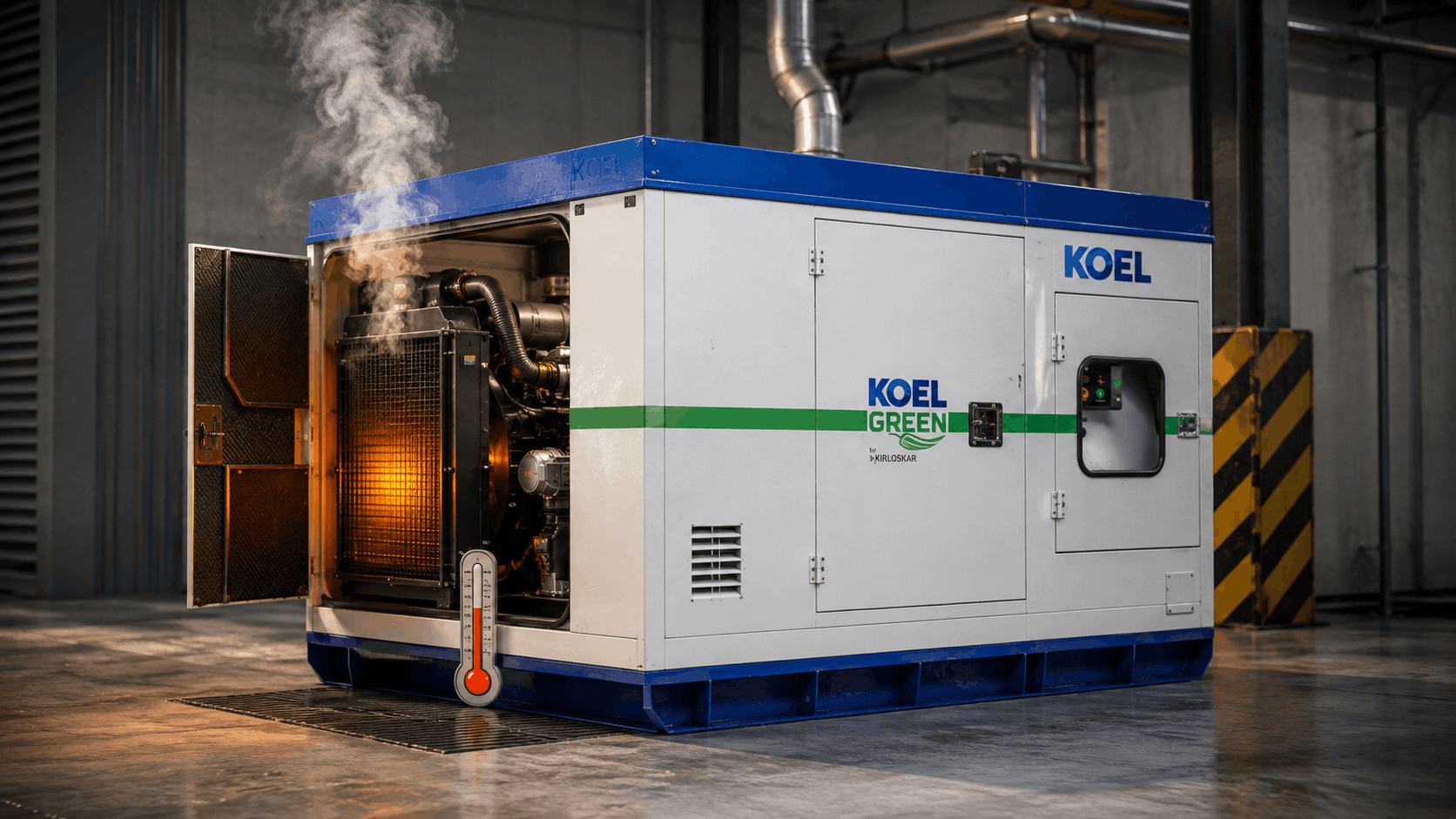
Quick answer: The generator overheating problem occurs when the engine produces more heat than is cooled by the cooling system. Some of the common causes include inadequate coolant, a clogged radiator, a malfunctioning fan or belt, overload, inadequate ventilation around the generator, as well as dirty air and/or oil filters. If the generator overheats, you need to reduce the load on the generator and allow it to idle for a couple of minutes before turning it off.
A power cut is bad enough. A generator that shuts down halfway through it, or worse, gets damaged, is much more costly. Overheating is one of the most common reasons generators fail in Nepal, whether at a Kathmandu hotel, a Chitwan factory, or a hospital in Butwal.
The good news is that overheating can be prevented, and it provides warning signs before causing any serious damage. This document defines overheating, reasons behind its occurrence, immediate steps to take in case of generator overheating, and ways to prevent future occurrences. The intended audience of this document includes homeowners, facility managers, and business owners.
What Is Generator Overheating?
Generator Overheating refers to a situation where the temperature in the engine exceeds the safety limits. Heat is produced by a diesel engine during fuel combustion. The cooling system, which includes the coolant, radiator, water pump, fan and thermostat in the case of liquid-cooled engines, removes this heat from the engine.
A typical diesel engine should be operated within an average coolant temperature range of 80°C to 95°C, although the exact temperature varies depending on the type of engine. Once the temperature is above that limit, the oil gets diluted, and there is expansion in metals, which causes the wearing out of parts. In most modern generators, once the temperature is too high, there is always an alarm or shutdown of the engine.
Warning Signs Your Generator Is Overheating
Catch these early, and you can often prevent damage:
- Temperature gauge or dashboard indicator is higher than usual
- A high temperature warning light or signal flashes
- Presence of steam or sweet smell emanating from radiator (indicates that coolant is boiling or leaking)
- Generator trips or shuts off by itself
- Voltage drop when load is applied
- Dark or white smoke emanating from the exhaust pipe
- A burning smell or abnormal sounds from the engine
- Engine runs much hotter than usual after running at normal conditions
If you notice any of these, act immediately.
What to Do Immediately If Your Generator Overheats
Follow these steps in order:
- Reduce the load: Turn off all non-essential equipment. Unload the generator of its load where possible.
- Let it idle for 2 to 5 minutes with no load: This allows the cooling system to cool the engine slowly. The engine should not be turned off abruptly if it is very hot, unless it is on fire or making strange noises.
- Switch the generator off: Once the engine has idled, turn it off.
- Wait at least 30 minutes: Wait until the engine has cooled completely.
- Never open the radiator cap while the engine is hot: The coolant is under pressure and can cause serious burns.
- Check the basics after it cools: coolant, engine oil levels, any leakages, whether the fan belt is loose or damaged, and obstructions in the radiator or air intake on the generator.
- Restart only once you have found the cause: If you cannot identify the reason, contact a technician instead of continuously restarting the generator.
Safety note: If you see smoke, a burning smell, or fuel leakage, do not get close to the generator and seek assistance from a technician.
Common Causes of Generator Overheating
1. Low coolant level
This is the most common reason for liquid-cooled generators. The coolant will leak out through hoses, the radiator, or the water pump seal, or it can evaporate gradually. Without enough coolant, the engine can’t shed heat.
Fix: Top up with the coolant type and mixture recommended in your manual once the engine is cool, then find and repair the leak.
2. Blocked or dirty radiator
The dust, mud, insects, and leaves may accumulate on the outside of the radiator’s fins while the scale or rust will accumulate on the inside of the radiator, preventing the flow of air and the coolant, which is problematic in dusty industrial environments.
Fix: Clean the fins carefully (never with high pressure, which can bend them) and flush the coolant system on schedule.
3. Faulty radiator fan or loose fan belt
If the fan does not rotate correctly, or if the belt used to drive the fan is loose or damaged, then airflow through the radiator will be greatly reduced.
Fix: Inspect the belt for cracks and correct tension. Replace worn belts and any damaged fan blades.
4. Failed thermostat or water pump
The thermostat regulates the flow of coolant to the radiator. If it gets stuck shut, coolant remains in the engine and gets heated up. A damaged water pump cannot even circulate coolant.
Fix: These need professional diagnosis and replacement. Don’t ignore a rising temperature reading in the hope it’s only the sensor.
5. Overloading the generator
Overloading will make the engine operate at higher temperatures. This problem occurs when extra devices are added to the system through time or even if the generator is undersized to begin with.
Fix: Calculate your real load, including startup surges from motors and air conditioners. Read our guide on how to calculate generator load requirement, and understand kVA vs kW so you size correctly. Generators generally run best at roughly 50% to 80% of their rated load.
6. Poor ventilation or airflow
A generator installed in a small enclosed space or basement will simply recycle its own heated air. This is probably the least considered cause in cases where the generator room was an afterthought design.
Fix: Make sure there’s enough fresh air coming in and a clear path for hot air to leave. Keep vents, louvres and exhaust ducting clear, and don’t store items around the unit.
7. Low or degraded engine oil
Oil not only acts as a lubricant but also transfers heat from the moving parts. If there is low oil or poor quality oil, then there will be increased friction and heat.
Fix: Check the oil level before each run and change oil and filters at the intervals in your manual. Our generator maintenance guide explains a simple schedule.
8. Clogged air or fuel filters
Dirty air filters deprive the engine of air, which leads to incomplete combustion and higher exhaust temperatures. Clogged fuel filters and low-grade diesel fuel can also cause the same issues.
Fix: Replace filters on schedule, more often in dusty conditions, and buy diesel from a reliable source.
9. Long continuous running in hot weather
Long interruptions coupled with high temperature of the surroundings subjected the cooling system to continuous stress. This is more probable during the summer season in the Terai region.
Fix: Plan for rest periods where the load allows, keep the radiator clean, and choose a generator with enough capacity margin for your site conditions.
10. Faulty sensors or gauges
Sometimes the generator isn’t overheating, and a bad sensor is reporting wrongly. But never assume so without checking. Confirm with a technician before treating a warning as false.
Quick Diagnosis Table
| Symptom | Likely cause | First thing to check |
| Overheats within minutes of starting | Low coolant, stuck thermostat, failed water pump | Coolant level, radiator hoses |
| Overheats only under heavy load | Overloading or clogged radiator | Actual load in kVA, radiator fins |
| Overheats after long running | Poor ventilation, ambient heat, dirty radiator | Room airflow, radiator cleanliness |
| Steam from radiator | Coolant leak or boiling | Hoses, radiator cap, water pump |
| Overheating with white or black smoke | Filter, fuel or combustion problem | Air filter, fuel filter, diesel quality |
| Alarm but engine feels normal | Faulty sensor | Ask a technician to test the sensor |
Air-Cooled vs Liquid-Cooled Generators: How Generator Overheating Differs
The type of generator changes where you look first.
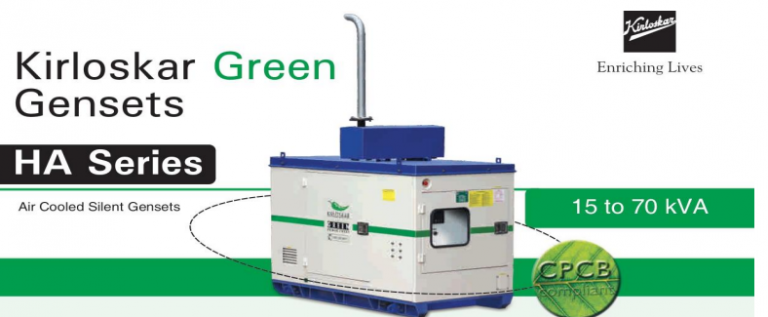
- Air-cooled generators include the Kirloskar HA range (15 – 70 kVA). The problem with the over-heating of these generators may lie in the clogged air flow, dirt on the fins, improper installation, and running the generator for an extended period of time in high temperatures. There is no coolant to refill. There is no coolant to top up, so keeping air paths clear matters even more.
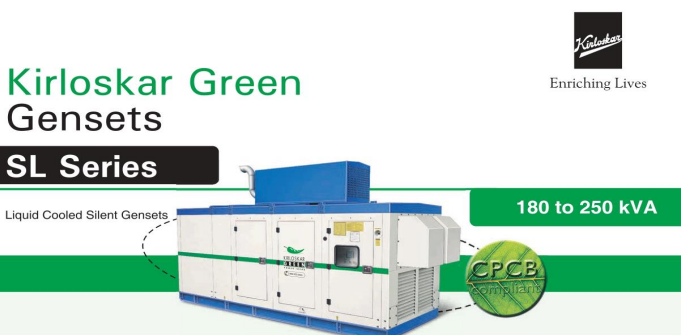
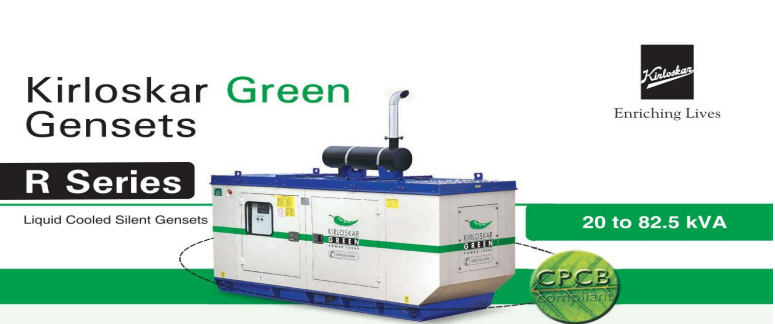
- Liquid-cooled generators, like the Kirloskar R, SL and DV range, there is the radiator method. The coolant level, hoses, thermostat, water pump and fan belt should be examined.
If you’re unsure which suits your site, read our comparison of air cooled vs liquid cooled generators.
Why Generator Overheating Is a Bigger Risk in Nepal
Some conditions in Nepal make cooling harder than the manual assumes:
- Altitude: Kathmandu has an elevation of around 1,400 metres. The reduced density of air will decrease the output of the engine as well as cooling, which means that the generator might face more stress than indicated by its rating.
- Summer heat in the Terai: In urban areas like Chitwan and Butwal, the hot surroundings allow for little tolerance from the air conditioning system.
- Dust: Construction, unpaved roads and factories clog radiators and air filters faster.
- Monsoon humidity: Damp conditions can affect electrical components and airflow in enclosed rooms. See our seasonal generator care guide for Nepal.
- Long, unpredictable outages: An engine that usually operates for one hour has to be operated for several hours; therefore, it will put pressure on the weakest part of the cooling system.
- Diesel quality: Poor fuel could lead to burning issues and create additional heat.
- Generators installed in basements or tight rooms: Most buildings were not constructed with generator ventilation in mind.
How to Prevent Generator Overheating
Prevention is simpler and cheaper than repair. Build these habits into your routine.
Before every run (or weekly for standby generators)
- Inspection of coolant and engine oil levels (coolant level when cold)
- Leakage under and around the generator
- Blockages in the radiator, ventilation or exhaust
Monthly
- Check the tension and condition of the fan belt
- Inspect the hoses for cracks or any signs of softness
- Remove the dust on the radiator fins and air intake
- Load test the generator and not just idling
On the schedule in your manual
- Replace oil and oil filter
- Flush coolant and replace it
- Get a technician to check thermostat and water pump
At installation and when the load changes
- Choose the generator size through proper calculations and allow for a safety margin
- Plan the generator room with adequate fresh air intake and exhaust space for hot air
- Check your capacity once again when adding heavy machinery
Consider monitoring. Smart systems such as the Kirloskar IoT enabled genset can report temperature and other readings remotely, so you can react before a shutdown.
An annual maintenance contract with an authorized service provider is the most reliable way to make sure none of this is forgotten.
When to Call a Professional
Contact a professional technician in case:
- The generator keeps on overheating even after refilling coolant and cleaning the radiator
- You spot coolant and oil getting mixed, or vice versa (oil turning milky means there is a problem)
- There is a continuous leak that cannot be pinpointed
- The thermostat, water pump or any of the sensors should be tested
- You notice white smoke along with overheating
- The generator was overheated but kept running
Continued running while overheated can cause warped cylinder heads, damaged gaskets or seized engines, and those repairs can cost far more than the original service would have. For a broader look at common faults, read our guide on common generator problems in Nepal.
Conclusion
Generator overheating is rarely random. It almost always comes down to a cooling problem, a load problem, an airflow problem or a maintenance problem, and all four can be prevented. Check coolant and oil regularly, keep the radiator and air paths clean, size the generator for your real load, and don’t ignore warning signs.
If your generator keeps overheating, or you’d like a professional inspection, BRT International Pvt. Ltd. can help. As an authorized Kirloskar/KOEL Green generator dealer in Nepal since 2007, we provide genuine parts, installation and maintenance support from our Kathmandu head office and our Chitwan and Butwal branches.
Need help with a generator overheating? Call 9851016011 or 9851042782, or contact us for service or a maintenance plan.
Frequently Asked Questions
What is the most common cause of generator overheating?
Low coolant is the most common cause in liquid-cooled generators, followed closely by a blocked radiator, a loose or broken fan belt, and overloading. In air-cooled generators, blocked airflow is the usual culprit.
What temperature is too hot for a diesel generator?
Most diesel generators run at around 80°C to 95°C coolant temperature. A reading well above the normal range for your model, or a high-temperature alarm, means you should reduce the load and stop the engine safely. Always check your manual for the exact limits.
Can I keep running a generator that is overheating?
No. Reduce the load, let it idle briefly, and switch it off. Continuing to run an overheating engine can cause severe damage such as a warped cylinder head or a seized engine.
Can I add water to an overheated generator?
Only after it has cooled completely, and never by opening the radiator cap on a hot engine. Use the coolant mixture recommended in your manual where possible. Water alone is only an emergency measure, and you should have the system properly serviced afterwards.
Does overloading cause a generator to overheat?
Yes. Overloading means that the engine will have to work extra hard and generate more heat. Make sure you calculate your load properly and buy an appropriately sized generator.
How often should I service my generator to prevent overheating?
Perform visual inspections on a weekly or per usage basis. Refer to your manual regarding changing the engine oil, the air filter and coolant. Most generator users will also schedule an annual or semiannual service, and more often for generators that operate in dusty or heavy-use areas.
Are air-cooled generators more likely to overheat?
Not necessarily. They depend on airflow rather than coolant, so they are more sensitive to poor ventilation, dust and hot environments. Placement and cleanliness are the key factors.
Popular Posts
Recent Posts
-
Kirloskar R Series vs SL Series: Which Generator Is Right for You?
Oct 06, 2026 | admin
-
Generator Overheating: Causes, Quick Fixes and Prevention Tips (Nepal Guide)
Oct 02, 2026 | admin
-
Diesel Generator Working Principle: The Complete Guide (2026)
Sep 27, 2026 | admin
-
Common Generator Problems in Nepal: Causes, Solutions, and Maintenance Tips
Sep 23, 2026 | admin
-
Generator Installation Cost in Nepal (2026): Complete Pricing & Buying Guide
Sep 10, 2026 | admin
-
IoT Enabled Genset: How Smart Generators Can Reduce Fuel Costs in Nepal
Sep 06, 2026 | admin
-
kVA vs kW: What’s the Difference? Simple Generator Power Guide
Sep 03, 2026 | admin
-
Best Generator for Hotel in Nepal (2026): Sizing, Silent Operation & Buying Guide
Aug 27, 2026 | admin