Are you thinking of purchasing a generator? Two units appear in all places: kVA and kW. They appear to be alike. But they are not the same thing. Confusion here may result in purchasing an underpowered, oversized or expensive generator for your household or business.
The following article gives the basic definition of kVA vs kW in simple terms. No mathematics required.
Quick Answer
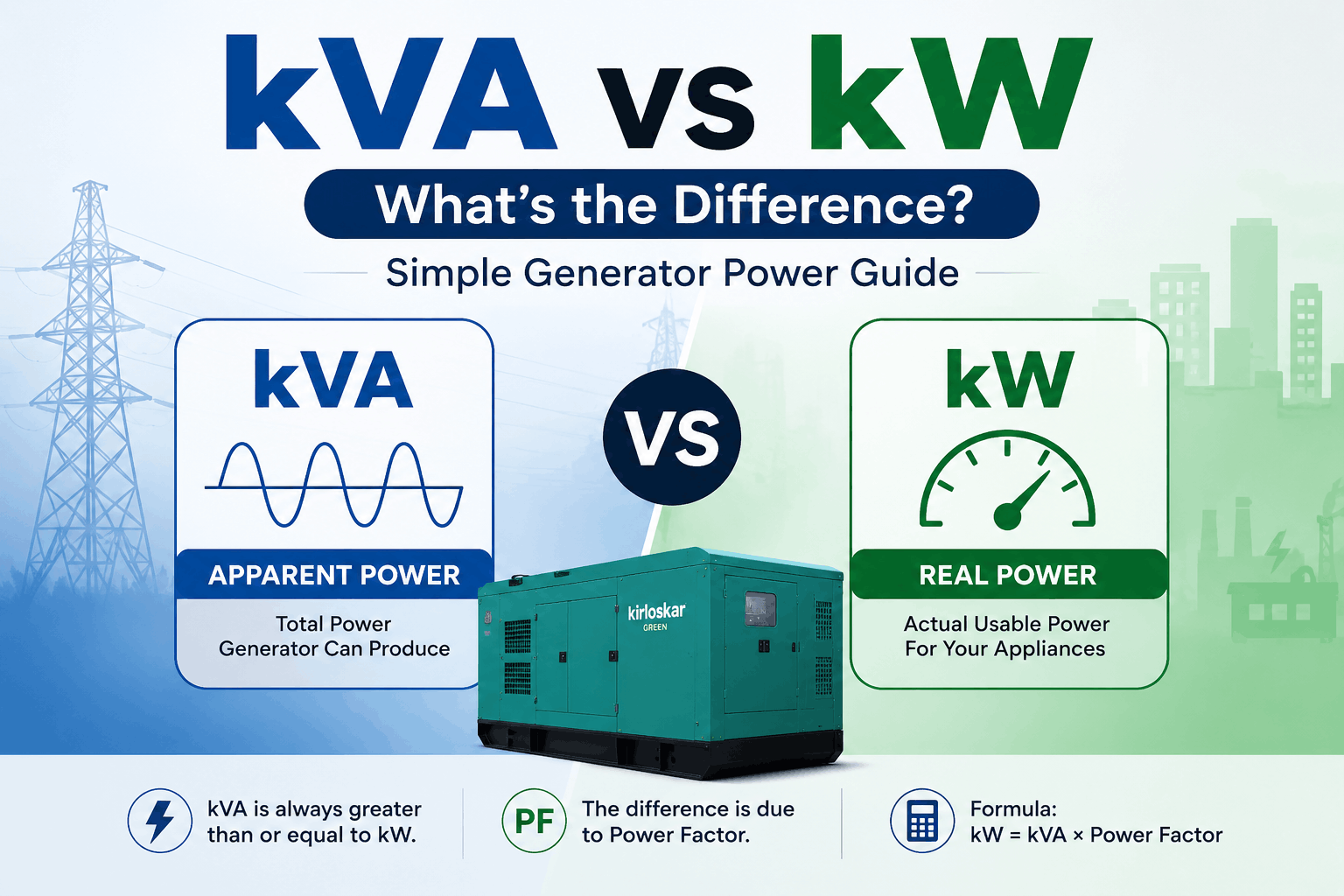
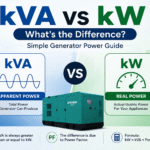
kVA is a measure of apparent power, whereas kW is the measure of actual power consumed by the devices you use. kVA is always greater than or equal to kW. The disparity between kVA and kW can be attributed to something called a power factor. As per standard convention, most generators have a power factor of 0.8.
Hence, the basic formula is:
kW = kVA × 0.8
So, a generator with 10 kVA will have the capacity to deliver 8 kW of actual power. This was the basic idea.
Let us now understand what kVA and kW are all about.
What Is kVA?
KVA represents kilovolt-ampere and it is the measurement unit of apparent power.
Consider the KVA rating of a generator as the total electrical capacity of the generator where it takes into account both useful electrical power and the electrical power wasted on running motors and electronics among others.
The rating of generators in KVA results from the consideration by the manufacturer of the total electrical load.
What Is kW?
kW means kilowatts. kW is a measure of actual power, otherwise known as active power.
kW is the actual power used to light your lights, cool your fridge, power your motor or machine. When determining how much power an appliance requires, the reading shown will almost always be expressed in kW or Watts.
When a question like, “How much power do I require?” is posed, what the person means is kW. However, generators are always available in kVA.
kVA vs kW: The Simple Table
| Term | Full Form | What It Measures | Used On |
| kVA | Kilovolt-Ampere | Apparent power (total) | Generators, transformers, UPS |
| kW | Kilowatt | Real power (usable) | Appliances, motors, machines |
Why the Difference Exists: Power Factor
The difference between kVA and kW arises due to the concept known as power factor (PF).
Power factor ranges from 0 to 1 and is an indication of how effectively electrical power can be converted to actual work.
- When the power factor is 1.0, all electrical energy is used, which is uncommon in reality.
- Generators made from diesel engines, like the Kirloskar generators, are normally rated at 0.8 power factor.
Therefore, out of the kVA rating of any generator, only 80% is converted into usable kW; 20% is used for operating motors and fans that have coils and magnetic parts.
The kVA to kW Formula
Here is the full formula:
kW = kVA × Power Factor
And to go the other way:
kVA = kW ÷ Power Factor
Example 1: Converting kVA to kW
You have a 20 kVA generator. Power factor is 0.8.
kW = 20 × 0.8 = 16 kW
So a 20 kVA generator gives you 16 kW of real, usable power.
Example 2: Converting kW to kVA
Your home needs 8 kW of real power to run all appliances.
kVA = 8 ÷ 0.8 = 10 kVA
So you would need a generator rated at least 10 kVA, not 8 kVA.
This one calculation prevents the most common generator buying mistake in Nepal: choosing a generator size based on kW needs but comparing it directly to a kVA price list.
Quick kVA to kW Conversion Chart
| Generator Size (kVA) | Real Power (kW) at PF 0.8 |
| 5 kVA | 4 kW |
| 10 kVA | 8 kW |
| 15 kVA | 12 kW |
| 20 kVA | 16 kW |
| 30 kVA | 24 kW |
| 62.5 kVA | 50 kW |
| 125 kVA | 100 kW |
Use this table as a fast reference when comparing generator models.
Why Generators Are Rated in kVA, Not kW
Generators are rated in kVA because the generator should be able to take care of the total load, which is not just the useful load. Motors, pumps, AC, or any other machine take more current than the actual requirement.
This is the reason that even though two generators have the same power rating, there will be different ratings for kVA, cost, and size based on the type of load for which they have been designed.
How This Helps You Size a Generator Correctly
Here is a simple 3-step method:
- Add up the real power (kW) of everything you want to run at once. Check appliance labels or ask an electrician for a load list.
- Divide the total kW by 0.8 to get the minimum kVA you need.
- Add a safety margin of 20–25%. Motors and compressors need extra starting power. A margin avoids overload.
Example: Total load = 8 kW → Minimum kVA = 10 kVA → With margin = 12–12.5 kVA generator.
This is exactly why load calculation matters more than picking a generator size by guesswork. If you want a deeper breakdown by home size, see our guide on how to calculate generator load requirement.
Single-Phase vs Three-Phase: Does It Change the Formula?
Yes, slightly. Residential premises operate using a single-phase power supply. Large office buildings, factories, and hospitals operate on three-phase electrical power. The formula for kVA to kW conversion remains the same; however, three-phase power handles more load than single-phase power does since three-phase power is more balanced and capable of handling heavy-duty load. For that reason, most gensets used in industries and other commercial premises use three-phase power.
A Real Example: Sizing a Generator for a Nepali Home
Let’s put the formula to work with a real household load.
Say your home runs these at the same time during a power cut:
- Lights and fans: 1 kW
- Refrigerator: 0.5 kW (with a higher starting surge)
- Water pump motor: 1 kW
- Television and router: 0.3 kW
- Washing machine: 0.8 kW
Total real power = 3.6 kW
Now convert to kVA:
kVA = 3.6 ÷ 0.8 = 4.5 kVA
Add a 25% safety margin for the motor start-up loads from the pump and fridge:
4.5 × 1.25 = 5.6 kVA
So a 5 kVA to 6 kVA generator comfortably covers this home. This matches what most Nepali households actually buy, and it shows why our 5kVA generator price guide is one of our most searched pages — most homes fall in this exact range.
kVA, kW, and Your Fuel Cost
Here’s a detail many buyers miss: fuel consumption depends on real power (kW) used, not the generator’s full kVA rating.
For example, if we have a 20 kVA generator operating on a load of 10 kW, the consumption of diesel will be much less compared to the same 20 kVA generator working at its maximum capacity of 16 kW. This is also the reason why oversized generators consume more fuel because of their inefficiency when operating at a lower percentage of load. The Kirloskar Green generators are designed to work at an efficiency level from 50% to 80% load.
How to Read a Generator Nameplate?
Every generator comes with a nameplate or spec tag, usually near the control panel. Knowing how to read the plate makes sure that you don’t have to take your sales representative’s word for everything.
The following points are important to note in the plate:
- Rated kVA – indicates the maximum apparent power rating and is usually marked for both prime and standby applications.
- Rated kW – can either be directly mentioned or calculated based on the 0.8 power factor rule.
- Voltage (V) – is usually 230V for single-phase residential and 400V for three-phase commercial purposes in Nepal.
- Frequency (Hz) – has to be 50Hz, which is the standard frequency in Nepal’s power grid.
- Power Factor (PF) – confirms what 0.8 (or any other figure) to use in kW calculation.
- Prime and Standby Rating – prime rating indicates continuous running, whereas standby rating is higher and used only for backup purposes. The standby kVA is always greater than the prime kVA of the same unit.
It’s very common for the dealer to mention only the kVA figure without providing power factor and prime/standby information. It’s very easy to overestimate the capabilities of the generator by referring to its higher standby power rating.
Sizing a Generator for an Office or Small Business
Home sizing is simple. Commercial sizing has more moving parts because businesses run heavier motor loads air conditioners, lifts, printers, and computers often at the same time.
Say a small office in Kathmandu runs:
- Air conditioning (2 units): 3 kW
- Computers and monitors (10 sets): 2 kW
- Lighting: 1 kW
- Printer, router, and office equipment: 0.5 kW
- Lift or small motor load: 1.5 kW
Total real power = 8 kW
Convert to kVA:
kVA = 8 ÷ 0.8 = 10 kVA
Add a 25–30% safety margin, since air conditioners and lift motors draw a heavy surge on startup:
10 × 1.3 = 13 kVA
Round up to the nearest standard size, and this office would need a 15 kVA generator matching the sizing logic behind our 15kVA generator price guide. Hospitals, hotels, and factories follow the same method, just with a longer equipment list and often a three-phase, liquid-cooled unit like the Kirloskar SL or DV Series.
Does kVA Rating Affect Generator Lifespan?
Yes, but indirectly. When the generator is operated well below the rated kVA for an extended period of time, referred to as under-loading, the process called wet stacking occurs. This condition happens when the fuel is not completely burned inside the exhaust system, reducing the life of the engine and increasing the cost of maintenance.
Operating the generator at or near maximum kVA for a prolonged time causes the opposite condition, the generation of excess heat and wear.
The optimum operating range is between 50% and 80% of the rated kVA, where the fuel efficiency is the highest. That includes Kirloskar Green diesel generators. This is one more reason accurate kVA sizing not just picking the biggest number you can afford protects your investment long term.
kVA vs kW When Comparing a Generator to an Inverter or UPS
If you have purchased inverters or UPSs before buying generators, you will find that these appliances are rated using the same units used in the rating of transformers, i.e. VA or kVA. However, when doing calculations related to the kVA and kW values, you must know that the inverters/UPSs use a different value of power factor, usually 0.8 – 0.9.
This matters if you are deciding between a generator and an inverter-battery setup, or combining both. A 1000 VA (1 kVA) inverter at a 0.8 power factor gives roughly 800 watts of real power enough for lights, fans, and a router, but not a water pump or refrigerator compressor on its own. When you compare backup power options side by side, always convert every quoted number to real kW first. Otherwise, a “bigger” VA number on paper might actually deliver less usable power than a smaller, well-rated diesel generator. If you are weighing the two options for your home or office, our guide on inverter vs generator for office power backup breaks this down further.
Why This Matters More in Nepal?
For businesses in Nepal, choosing the right backup power generator is not only about comfort but about ensuring smooth business operations in the face of irregular power cuts, industrial load-shedding, or voltage fluctuation in the power supply. Choosing the wrong size of the generator either way entails a penalty:
- An undersized generator trips due to overload, damages motor parts, or fails exactly when it is needed during a power outage, a hospital crisis, or at a time when there are many guests in the hotel.
- An oversized generator consumes excess diesel, is more expensive, and depreciates quickly because of its poor performance while running underloaded.
Choosing the correct ratio of the kW to kVA generator at the purchase stage is a one-time calculation that brings daily benefits every time the generator operates. That is why the authorized dealers conduct a detailed load survey with their clients.
Common Mistakes People Make
- Considering kVA and kW as equivalent values. This is incorrect the kVA value will always be greater.
- Neglecting power factor when choosing between different generators. Be sure to know what power factor a generator has used in its kVA ratings.
- Not providing any room for a safety margin in cases of motor loads. Devices like air conditioners, pumps, and refrigerators require higher starting currents.
- Selecting products according to their price per kVA. A lower kVA rating doesn’t necessarily provide higher kW output.
Frequently Asked Questions About kVA vs kW
What is the difference between kVA vs kW?
The kVA rating indicates apparent power, whereas kW is used to indicate actual power. In terms of a generator, kVA refers to the total electrical power provided by the generator, and kW indicates the amount of power used for operation of the appliances. The difference depends on the power factor.
How many kW is 1 kVA?
At the commonly used 0.8 power factor, 1 kVA equals approximately 0.8 kW. However, the exact kW value depends on the generator’s power factor.
How many kW is a 5 kVA generator?
A 5 kVA generator produces approximately 4 kW at a 0.8 power factor.
Calculation: 5 kVA × 0.8 = 4 kW
How do you convert kW to kVA for a generator?
To convert kW to kVA, divide the required kW by the power factor.
Formula: kVA = kW ÷ Power Factor
For example, a 20 kW load at 0.8 PF requires at least 25 kVA.
Why are generators rated in kVA instead of kW?
Generators are commonly rated in kVA because the alternator must handle the total apparent power and current, including the reactive component of loads such as motors and transformers. kW represents only the real power delivered to the load.
Does a lower power factor require a larger generator?
Yes. For the same kW load, a lower power factor means the generator must supply more kVA. For example, a 20 kW load requires 25 kVA at 0.8 PF, but about 28.6 kVA at 0.7 PF.
Can a 100 kVA generator run a 100 kW load?
Not necessarily. At a 0.8 power factor, a 100 kVA generator corresponds to about 80 kW of real power. A 100 kW load would require approximately 125 kVA at 0.8 PF, before considering additional sizing requirements.
How do I calculate what size generator I need?
Start by calculating the total running load in kW, then consider the power factor and starting requirements of motors, pumps, compressors, and other equipment.
A basic calculation is:
Required kVA = Load in kW ÷ Power Factor
Motor starting current and load changes should also be considered because they can temporarily increase the generator’s electrical demand.
What happens if a generator is too small for the load?
An undersized generator can become overloaded, causing voltage or frequency problems, overheating, nuisance shutdowns, and possible damage to the generator or connected equipment. Motor starting loads can make the problem worse.
Is kVA the same as kW at a power factor of 1?
Yes. When the power factor is 1.0, kVA and kW are equal. For example, 10 kVA at PF 1.0 equals 10 kW. Purely resistive loads such as some heaters have power factors close to 1.0.
What is the difference between prime kVA and standby kVA?
Prime kVA is intended for applications where the generator operates as a primary power source for extended periods. Standby kVA is intended for emergency backup during utility power failures. If the generator will run for long or continuous periods, the prime rating should be considered when sizing the system.
Do motors require more kVA when starting?
Yes. Motors can draw significantly higher current during startup than during normal operation. This starting demand can affect the generator’s required capacity, even when the motor’s normal running load appears to be within the generator’s rating.
Which is more important when choosing a generator: kVA or kW?
Both are important. kW tells you how much real power your equipment needs, while kVA determines the generator’s apparent-power capacity. A proper generator selection should consider kW, kVA, power factor, motor starting requirements, load type, and the generator’s prime or standby rating.
Final Word
kVA and kW are not interchangeable, but the relationship between them is simple once you know the formula: kW = kVA × 0.8. Use this to check any generator’s real output before you buy, and always size your generator with a safety margin for motors and startup loads.
If you are still unsure what size generator fits your home, office, or industry, BRT International’s team can calculate the right kVA rating for you free of guesswork, and backed by 18+ years of experience as an authorized Kirloskar generator dealer in Nepal.
Contact BRT International for a free generator sizing consultation.
Popular Posts

Recent Posts
-
Generator Installation Cost in Nepal (2026): Complete Pricing & Buying Guide
Sep 10, 2026 | admin
-

IoT Enabled Genset: How Smart Generators Can Reduce Fuel Costs in Nepal
Sep 06, 2026 | admin
-
kVA vs kW: What’s the Difference? Simple Generator Power Guide
Sep 03, 2026 | admin
-

Best Generator for Hotel in Nepal (2026): Sizing, Silent Operation & Buying Guide
Aug 27, 2026 | admin
-

15kVA Generator Price in Nepal (2026): Features, Cost & Buying Guide
Aug 09, 2026 | admin
-
Silent Generator Price in Nepal (2026): Complete Price List & Buying Guide
Aug 03, 2026 | admin
-

Best Generator for Home Backup Power in Nepal: How to Choose the Right One (2026)
Jul 31, 2026 | admin
-
Kirloskar Generator Price in Nepal (2026): Best Buying Guide
Jul 20, 2026 | admin