Power outages occur in multiple regions around the world, including the country of Nepal. Your business will lose important operational hours, production capacity and financial resources because of power outages that happen either during grid maintenance or due to weather conditions or as a result of increased energy needs during certain times of the year.
The requirement for reliable power backup systems to support office operations exists for all types of organizations, which range from small startups to large enterprises.
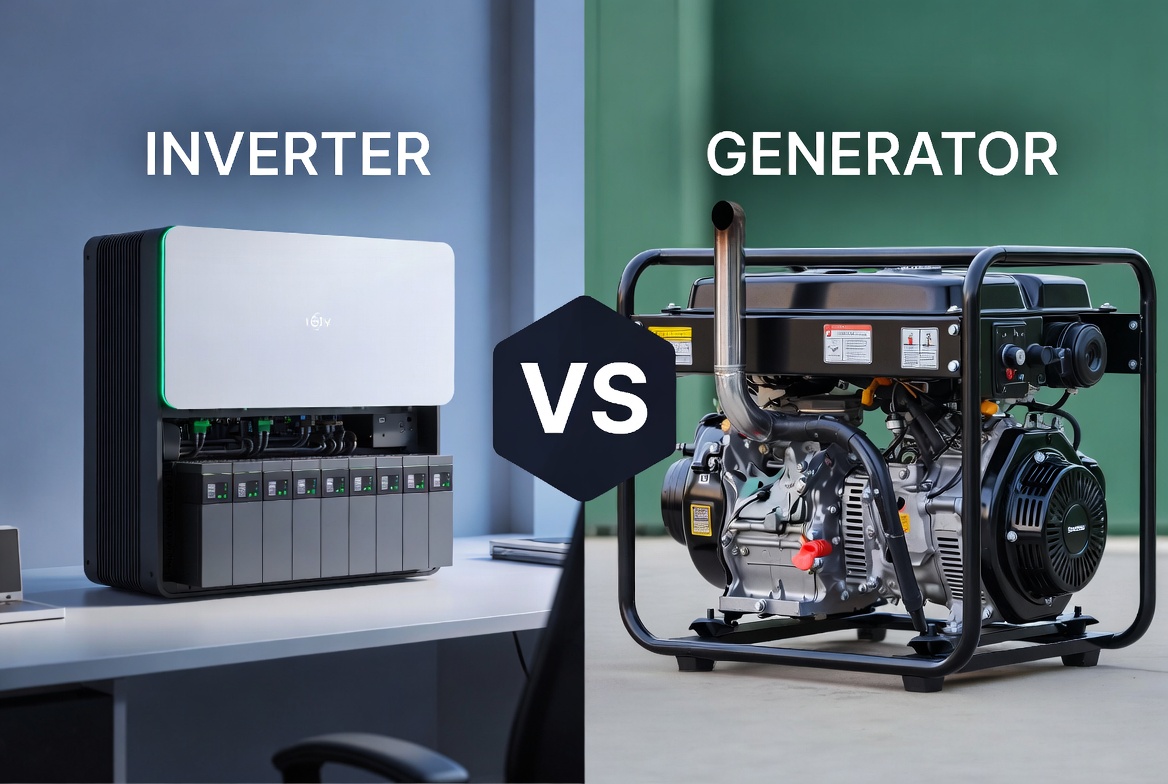
This complete 2026 guide presents in-depth information about two main power backup solutions, which include inverters vs generators. You can also visit Why reliable power backup is essential for modern businesses in Nepal.
This guide will help you choose the best backup system for your office, ensuring smooth operations, efficient employees, and a comfortable work environment, while comparing inverters vs generators effectively.
What Is an Inverter?
An inverter is a type of electronic equipment used to offer backup power using battery storage. The moment there is an outage of the main power grid, the inverter switches automatically to power the equipment from its battery pack and converts the DC current into AC current, just like the one used in offices.
This switching takes place in mere seconds, making inverters perfect for electronic gadgets such as laptops and servers.
Key Features of Inverters
- Instant Backup: Offers a continuous electricity supply without any interruption.
- Quiet Operation: Does not make any noise or emit any fumes like the fuel generators.
- Low Maintenance: Features fewer mechanical components that need little maintenance.
- Clean Output: Can be used with any kind of electronic device.
- No Fuel Needed: Runs completely on rechargeable batteries.
How Inverters Work in a Power Backup System?
Inverters do not generate electricity; rather, they convert electricity stored in the batteries into usable electricity when there is an outage of electricity from the power grid in your office. Current-day inverters have been manufactured to operate fast enough to maintain your devices without any interruptions.
Here is how the procedure usually happens when you use an inverter as a backup system:
- Charging the Batteries from the Grid
When your office receives regular grid power, the inverter will charge the batteries and also provide electricity for your office equipment. This ensures that your batteries are fully charged at all times.
- Detecting a Power Outage
The inverter constantly monitors the power supply at the source. If there is a power supply failure at the source, this becomes obvious immediately through sensors.
- Switching to Battery Power
The transition happens almost immediately, from the power grid to the battery. The sudden transition ensures that all equipment in your office, such as the computer, printer, and router, keeps running without any glitches.
- Converting DC to AC Electricity
The electric power stored in the battery is in DC form, but the machines in the office consume AC electric power. The transformation of electric power from the battery (DC form) to AC electric power occurs instantly.
- Returning to Grid Power
The inverter will then switch back to using the grid supply to charge the batteries.
What Is a Generator?
The generator may be defined as the device that produces electric energy by means of an engine. In contrast to the inverter, whose source of energy is the battery, the generator produces energy through a mechanical process. The generator is very important, especially when there is no electric power or when the need for electric power is high.
Key Features of Generators
- High Power Production: Utilized to run heavy machinery.
- Long Run Time: Runs until all the fuel is exhausted.
- Scalability: Available in various forms depending upon individual needs.
- Full Building Capacity: Suitable for operating office equipment or entire building power units.
How Generators Work?
Electric power generation uses a physical effect that is known as electromagnetic induction. This technology was discovered by Michael Faraday. Electric current generation happens due to the motion of a conductor in a magnetic field, such as a copper coil. Electromagnetic induction can be used when generating electricity using a generator that converts mechanical energy into electrical energy.
The working process of the generator can be described as follows:
- Detecting a Power Outage
The connection of the generator system with the automatic transfer switch is done by continuous checking of the power supply status by the automatic transfer switch. Any issue in the power supply status is recognized by the automatic transfer switch, which then activates the process of the generator.
- Engine Starts Running
There is a generator set comprising an engine, which runs on any of the fuels such as diesel fuel, petrol, natural gas, or LPG. The generator begins operating, and the energy is generated from it.
- Mechanical to Electrical Conversion
The engine causes the shaft to turn, after which the turning of the alternator occurs, with magnets and wires being part of the alternator. Changes in the magnetic field in the magnets cause the creation of electricity in the wires.
- Electricity Flows to Office Load
Rotation occurs when the engine drives the shaft, which causes the alternator to rotate. The alternator consists of magnets and coils of wire. Electricity is generated when there is a change in the magnetic field created by the magnets.
- Shutdown When Grid Returns
With the restoration and stabilization of the electric supply system, the generator ceases to function (provided that the link-up had been made through the ATS process), and the office resumes its normal electricity consumption.
3. Inverter vs Generator: Comparison
Deciding whether to choose an inverter vs generator will depend primarily on the electrical requirements of the office. The table below highlights the difference between Inverter vs Generator:
| Feature | Inverter | Generator |
| Source of Power | Uses stored energy in the batteries, converted to AC form | Uses energy from fuel-based generators |
| Startup Time | Very quick (<1second) | Takes some seconds to warm up |
| Noise Level | Quieter, suitable for indoor use | Noisy, depending on the type of engine |
| Maintenance Requirements | Low, occasional battery checks and inspections | Regular oil, filter, fuel and belt maintenance needed |
| Load Capacity | Limited capacity determined by the battery and the inverter | High can manage large equipment and loads |
| Environmental Impact | Eco-friendly, no fuel or emissions | Polluting emits fumes and requires fuel |
| Best Use Case | Suitable for small and medium offices with reasonable loads | Suitable for medium to large office buildings and industries with high loads |
4. Cost Analysis: Initial, Running & Long-Term
Choosing an alternative power source cannot be done by considering the efficiency of that source alone; it should rather be based on how cheap it is. Inverter vs Generator costs differ based on installation, operation, and maintenance.
The following will assist you in picking the right equipment for your office.
Inverter Costs
1. Initial Cost
The cost involved in setting up the inverter is higher than the cost of setting up the generator because the cost of setting up the inverter will occur together with the cost of setting up the storage battery. A higher capacity or even a lithium battery setup will increase the cost of setting up initially. An inverter setup does not involve any fuel or engine setup, so the cost of setup will be low.
2. Running Costs
Inverters are less expensive to run since they use power from the grid for battery recharging rather than using any other form of energy. If the inverter operates within the electric circuit, then operating costs will accrue in the form of an increase in the power consumption charges. Should the inverter be powered by solar energy, then there will be insignificant cost implications.
3. Long‑Term Costs
The consideration of cost in relation to the usage of the inverter will be in respect of battery renewal, which is done after a certain period of time, which spans five years.
Generator Costs
1. Initial Cost
The generator would definitely be expensive when compared to the basic inverter in situations where one purchases generators to power offices and other businesses. These expenses would include the expense for the generator itself, the installation expenses, and even expenses for installing transfer switches, among others.
2. Running Costs
Running expenses occur as a result of the usage of fuel. The generator operates using either diesel, gas, or kerosene. During blackouts, huge amounts of fuel could be used by the generator based on its size. It means that fluctuations in fuel prices would have an impact on the running expenses. Moreover, huge generators consume more fuel than smaller generators.
3. Long‑Term Costs
Maintenance is required throughout the lifespan of the generator. This involves carrying out maintenance operations on the generator, including oil changes, filter changes and engine changes, among others. In spite of the fact that the generator will be able to continue operating nonstop with enough fuel, maintenance costs should not be ignored.
5. Noise, Environment & Comfort
While deciding whether to purchase an inverter or a generator in your office, noise and environmental pollution become the most significant factors to consider because your office environment requires calmness.
Noise Levels
- Generators: Normally, a generator produces a lot of noise because it runs nonstop at the same pace. As such, the normal generator will always produce many decibels. This means that one cannot think of using a generator indoors since it produces too much noise.
- Inverters: The equipment will most probably operate without any sound since they change electricity from batteries powered by slow-moving engines into useful energy.
To put it simply, A generator may be compared to heavy equipment used outside, whereas an inverter is comparable to noise made inside.
Environment & Emissions
- Generators: Since generators produce energy through fuels like diesel, gasoline, and natural gas, they release gaseous elements into the atmosphere. The degree of pollution will depend on how far the generator is from the office and if there is sufficient ventilation.
- Inverters: Given that inverters generate power using batteries, there will be no emissions. Therefore, the use of inverters is highly recommended because they do not contribute to air pollution.
Comfort in the Office
The factors of noise and smoke not only affect comfort, but also:
- Productivity: Noise from the engine can affect productivity.
- Employee satisfaction: A clean and quiet environment will enhance the employee’s satisfaction.
- Work layout: If the backup is noisy and produces smoke, then it should be kept away from the office.
6. Load Types: What Your Office Needs
Each office requires power depending on the machinery used. The decision on the type of backup equipment, inverter or generator, will depend on the load you have.
1. Low to Medium Load
These appliances consume average power and are common in most office spaces:
- Computers & Servers
- Lighting & Fans
- Routers & Modems
- Printers & Scanners
Recommended Backup Device: Inverter
- Instant & Stable Power Supply
- Ideal for Sensitive Equipment
- Quiet & Efficient Operation
2. High Load
These include devices that consume a lot of power and are mostly used in bigger offices or at particular working points:
- Air conditioning system
- Heavy printer and copiers
- Coffeepots or water coolers
- Office machinery
Recommended Backup: Generator
- Power Consumption Capability
- Very suitable during long periods of power outages
- Suitable for the overall requirements of an office or building
7. Automatic vs Manual Start Systems
The method by which the generator or hybrid plant initiates is yet another important consideration when selecting among the different options. There are two different start methods for offices to consider: Automatic and Manual.
Automatic Transfer Switch (ATS)
ATS is an automated mechanism that works in order to switch automatically to power:
- Detects grid failure: Instant detection of grid failure.
- Starts the generator: Automatic start of generator; no human intervention required.
- Switches to backup power: Supply of electricity to office equipment from a backup source.
Best For:
- Office facilities operating outside regular office hours
- Businesses needing round-the-clock availability
- Systems like servers, security systems, and telecommunications equipment
Manual Start Systems
The manual starter requires that the generator be manually started when there is a power outage in the mains.
- Very affordable and easy to install for small companies.
- Not suitable for offices that require a continuous power supply.
Best For:
- Offices with staff available at the time of failure
- Small offices with low power consumption
8. Environmental Impact & Sustainability
Consider the impact of the backup system on the environment when choosing one:
- Generators: Create energy through burning fuel and create smoke, resulting in air pollution.
- Inverters: Work through stored energy in batteries without any smoke or noise. When used along with solar panels, it becomes an alternative source of energy.
Business Benefits of Inverters:
- Lower carbon emissions
- ESG compliant
- Enhances corporate image as a sustainable office
9. Hybrid Solutions (Inverter + Generator)
A hybrid system works by combining the features of inverters and generators.
How It Works:
- Inverter: Provides an immediate source for critical equipment like computers and servers.
- Generator: Provides electricity to office premises during extended outage and high consumption period.
- Automatic Transfer System (ATS): Automatically switches from one to another of three sources without any interruption.
Benefits of Hybrid Systems:
- Immediate power during outages
- Handling of large power demand
- Minimal fuel use and increased battery runtime
- Adaptable and scalable according to growing office space requirements
10. Choosing the Right Solution: Office Use Cases
Small Office (5–20 seats)
- Load Average: PC, lights, small server
- Best Choice: Inverter or Small Hybrid
- Pros: Silent operation, cost-effective, immediate backup
Medium Office (20–50 seats)
- Load Average: AC, servers, numerous other devices
- Best Choice: Combination of a medium generator and an inverter
- Pros: Offers constant power for high-demand loads, zero downtime guaranteed with ATS
Large Office (50+ seats)
- Typical Loads: Total power consumption of the facility, industrial machinery and lengthy periods of non-operation.
- Best Solution: Industrial Generator with a few Inverters.
- Advantages: Best reliability and backup paths, easily scalable solution.
11. Installation Requirements & Safety Tips
Your backup system should be installed properly to ensure security, efficiency, and durability. Here are some guidelines for your inverters and generators:
Inverter Installation
- Ventilated, dry space: Prevents overheating and harm to batteries.
- Proper wiring and grounding: Helps facilitate efficient electrical flow and protects office equipment from any harm.
- Battery health monitoring: Continuously checks the condition of batteries to ensure efficient backup.
Generator Installation
- Open, well-ventilated area: There is no chance of exhaust gases accumulating in such a way that there would be less likelihood of fire outbreak.
- Exhaust placement: Exhaust must be correctly placed in order to prevent the entry of exhaust gases into the office area.
- Fuel safety measures: Fuel must be kept safe in accordance with fire safety norms.
- Regulatory compliance: Installation must conform to local laws.
Professional Tip: Seek professional help from certified electricians in installing and checking the proper functioning of the equipment.
12. Maintenance Best Practices
Maintenance is key to extending the life span and performance of your system.
Inverter Maintenance
- Battery water fill-up: For unsealed batteries, water should be at the optimum level.
- Clean terminals: Prevent corrosion to ensure maximum energy transfer.
- Annual voltage check: Ensure efficient working of batteries and inverters.
Generator Maintenance
- Oil changes: Keep the engine running efficiently.
- Fuel filter replacements: Ensure there is no blockage in the fuel and that it burns efficiently.
- Load testing: Ensures that the generator is capable of handling the required load of the office
- Exhaust inspection: Make sure that the system has proper venting to avoid problems.
Important Tip: Maintenance ensures that the system works efficiently for long periods without any breakdowns.
13. Future Trends in Power Backup
Backup solutions are changing in line with technological changes that increase office productivity and sustainability:
- Solar + Inverter Integration: Use solar energy to charge batteries in inverters to save on power and fuel consumption from the grid.
- Smart Monitoring & IoT: Remote monitoring, automated alerts, and preventive maintenance scheduling.
- Hybrid Grid Support: Optimize the consumption of energy using the grid, solar, inverter, and generator.
Such trends guarantee that the energy backup solutions are reliable, environmentally friendly, and intelligent.
Conclusion: Inverter vs Generator
Selecting an appropriate power backup is very important for maintaining the efficiency of your office work as well as the safety of your equipment. An inverter is recommended for small and medium-sized offices, whereas a generator is a better option if you have a large office requiring more power capacity. If you want maximum efficiency, you can combine both types.
Ensure the safety of your office by installing BRT International’s Kirloskar generators, as we are its certified dealers. Call us now to benefit from our services.
Popular Posts
Recent Posts
-
Kirloskar R Series vs SL Series: Which Generator Is Right for You?
Oct 06, 2026 | admin
-
Generator Overheating: Causes, Quick Fixes and Prevention Tips (Nepal Guide)
Oct 02, 2026 | admin
-
Diesel Generator Working Principle: The Complete Guide (2026)
Sep 27, 2026 | admin
-

Common Generator Problems in Nepal: Causes, Solutions, and Maintenance Tips
Sep 23, 2026 | admin
-
Generator Installation Cost in Nepal (2026): Complete Pricing & Buying Guide
Sep 10, 2026 | admin
-
IoT Enabled Genset: How Smart Generators Can Reduce Fuel Costs in Nepal
Sep 06, 2026 | admin
-
kVA vs kW: What’s the Difference? Simple Generator Power Guide
Sep 03, 2026 | admin
-
Best Generator for Hotel in Nepal (2026): Sizing, Silent Operation & Buying Guide
Aug 27, 2026 | admin