Introduction
In the current digital world, the world needs instant and uninterrupted access to information, be it for video streaming, online banking, healthcare facilities, cloud computing, or business processes. But what lies behind these processes is a facility that works 24/7, and that facility is a data center. These are the places where servers are kept, where the data is stored, and where the application runs, providing seamless connectivity for the businesses and the people of the world.
However, despite the level of sophistication in the software and the hardware, the backbone of all the operations in any data center is the power supply. However, any disruptions in the power supply can result in catastrophic consequences, and this is the reason why generators for data centers are not just required; they are essential.
In this blog, we will cover:
- What generators for data centers are
- Why are generators for data centers important
- How do generators for data centers operate during power outages
- What types of generators do data centers use
- Design, safety, and redundancy considerations
- Trends in backup power solutions
By the end of this blog, you will understand why backup generators for data centers are important.
What Are Generators for Data Centers?
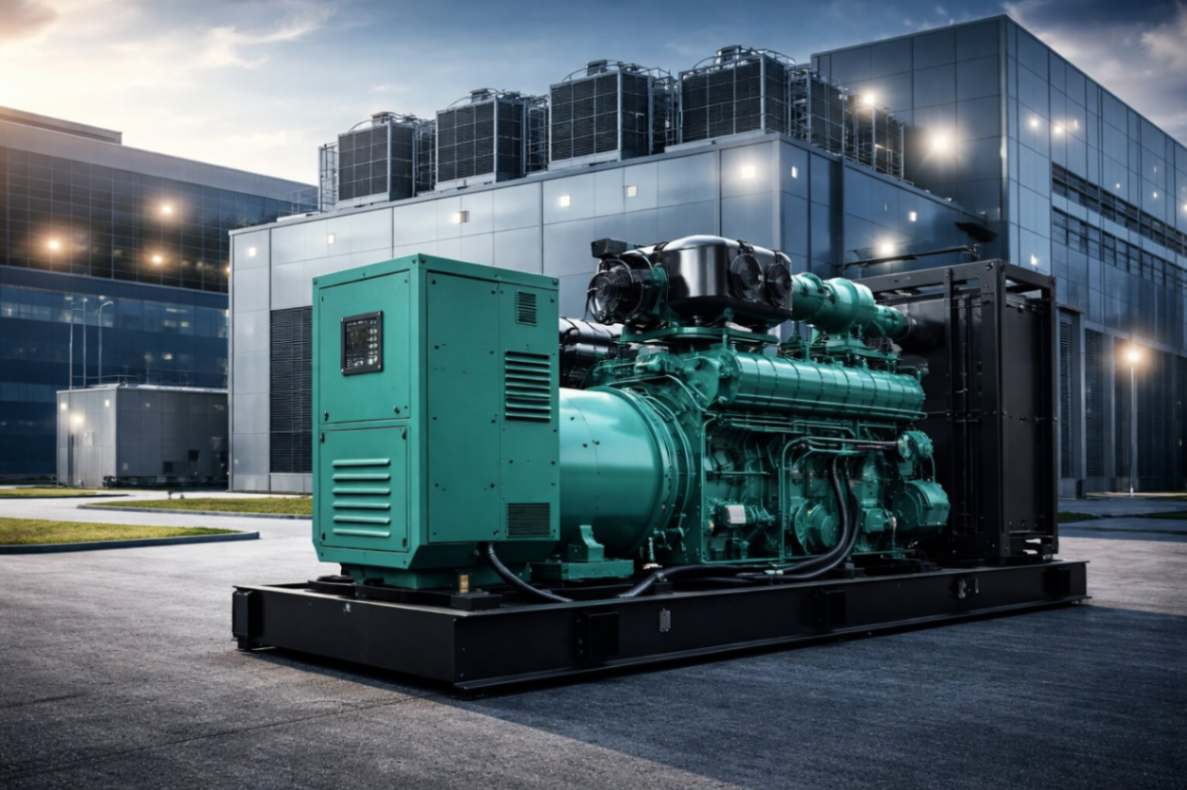
Essentially, generators for data centers are devices that provide electrical energy in the event of failure of the main electrical grid. For a data center where operations must be continuous without any downtime, the generators provide a backup source of energy that will kick in when the main source of energy fails.
Data centers require uninterrupted electrical energy for the running of:
- Servers and storage devices
- Network switches and routers
- Cooling and ventilation systems
- Security, fire suppression, and monitoring systems
- Lighting and general infrastructure
Without a functioning source of backup power, any downtime, it may result in major risks for the operations of the data center. Estimates indicate that more than 60% of the outages in data centers are a result of power failure, which highlights the importance of generators for data centers.
Why Are Generators for Data Centers Vital?
1. Ensuring Continuous Power and Uptime
Data centers are expected to be operational 24/7 without any downtime. Today’s high-end data centers are expected to be available 99.999% of the time, or “five nines.” This level of dependability translates into only minutes of downtime per year and is impossible without backup generators for data centers.
In case the primary grid experiences power outages, the generators are used to ensure that IT operations are running, clients are connected, and operations are stable and uninterrupted.
2. Protecting Critical Data and Services
Unexpected loss of power can cause:
- Corrupted database
- Incomplete transactions
- Unprocessed user requests
- Damage to virtual machine images
A reliable generator system eliminates these problems because there is always a source of power available.
3. Preventing Financial Losses
Downtime caused by power outages can also be costly. Every minute of downtime translates into thousands of dollars in potential lost revenue to businesses that are data-driven, especially in the financial industry, healthcare industry, and e-commerce. Generators for data centers ensure that businesses are not affected in terms of revenue generation in case of a power outage.
4. Supporting Safety and Compliance Needs
Most industries have regulations that require businesses to have disaster recovery and business continuity plans in place. Some of the regulations require businesses to have the ISO/IEC 27001 certification, which requires them to provide reliability and redundancy. Generators for data centers are required in these cases.
5. Protecting Sensitive Equipment
Voltage spikes or shutdowns may also destroy expensive equipment such as servers, power distribution units, or cooling systems. Redundant power systems help stabilize the voltages and remove sudden changes in the voltages.
How Generators Work in a Data Centre?
The power system in a data center is not just an idle generator but is composed of different layers that provide power and protect operations from outages. The power system is composed of different layers that provide power to servers and other systems in case of an outage.
Core Components of a Data Center Power System
- Utility Power (Grid): The main source of electric power that normally supplies power to the data center.
- Uninterruptible Power Supply (UPS): Supplies power immediately from batteries in case of power failures, bridging the gap until generator power is available.
- Backup Generators: The generators for data centers supply power in case of an outage, powering the entire data center until the utility power supply is restored.
- Automatic Transfer Switches (ATS): The ATS will detect the loss of the utility power supply and will transfer the electrical load from the UPS supply to the generators.
Step-by-Step Response During a Power Failure
- The utility grid fails, resulting in a power interruption.
- UPS systems immediately come into action, providing power to all the loads.
- The ATS recognizes the failure of the grid and sends a signal to start the generators.
- The generators start in a matter of seconds, providing power.
- The ATS switches the loads from the UPS to the generators.
- These generators will continue to supply power until the grid is stable.
- Once the grid is stable, the source of power will be transferred from the generators to the grid by the ATS, and the generators will be switched off.
This is an automated process that requires no human intervention. This minimizes the chances of errors.
In the above process, the use of UPS systems, generators, and ATS creates redundancy. This is because if the grid fails, the generators can provide power. This is the basic idea behind reliable data center power management.
Types of Generators Used in Data Centers
Data centers can employ various kinds of backup generators for data centers based on the size, budget, uptime, and environmental issues.
1. Diesel Generators
Diesel is the most frequently utilized and reliable fuel for data center backup generators. About 65-75% of large data centers worldwide employ diesel generators because of the following reasons:
- High energy density
- Fast start and load acceptance
- Fuel storage independence from grid supply
- Proven reliability under high loads
Diesel generators are able to supply power from several megawatts.
Drawbacks include:
- Higher emissions compared to gas
- Need for large onsite fuel tanks
- Compliance with environmental regulations
2. Natural Gas Generators
Natural Gas Generators are becoming more popular and are used mostly in urban areas.
Pros:
- Emissions are cleaner compared to diesel
- Supply is connected to the pipeline, and no fuel is required to be stored
Cons:
- Dependency on the reliability of pipelines
- Disruption if pipelines fail during a disaster
Gas generators are an attractive choice for those facilities that require environmental compliance and power availability.
3. Hybrid Fuel Systems
Hybrid fuel systems are used to generate power with the help of different types of fuels in an integrated manner, so that dependability and environmental performance are better.
4. Emerging Technologies: Fuel Cells & Hydrogen
As the world is moving towards a sustainable future, the future of data centers is looking towards the technology of the future, i.e., fuel cells/hydrogen generators, not only for reducing emissions but also to take the world towards a greener future.
Backup Power Design and Redundancy Strategies
Designing a generator system for a data centre isn’t as simple as just plugging in a large unit. Engineers use well‑defined redundancy models to ensure uptime even if a component fails.
Common Redundancy Models
- N+1: One extra unit above the required capacity
- N+2: Two extra units for higher reliability
- 2N: Full duplication two complete systems running in parallel
Redundancy improves power reliability dramatically and lets data centers achieve higher Tier levels in industry standards. For example:
| Tier | Uptime % | Annual Downtime |
| Tier I | ~99.67% | ~28.8 hrs |
| Tier II | ~99.74% | ~22 hrs |
| Tier III | ~99.982% | ~1.6 hrs |
| Tier IV | ~99.995% | ~0.4 hrs |
Higher tiers require fault‑tolerant and redundant systems, and generators are a major part of achieving those levels.
N+1 vs 2N Redundancy
- N+1: One extra generator is provided over what is required
- 2N: Every power path is provided in duplicate
Data centers that are designed for 2N redundancy or higher can survive unforeseen failures without interruption. This is particularly true for hyperscale and enterprise data centers, where uptime is not optional.
Sizing and Planning Generators for Data Centers
Selecting the right generator for data centers is not just about size; it is about planning for the peak demand, redundancy, growth, and compliance.
Key Factors in Generator Planning
Proper planning for the generators is necessary to guarantee the availability of power in the event of a blackout. The factors that the engineer has considered in the design of the backup source of power are:
- Total Electrical Load: The engineer has to calculate the total load required by the IT devices, the cooling system, the lighting system, etc.
- Peak Demand: The engineer has to calculate the maximum demand required by the data center.
- Growth Projections: Plan for the future growth of the data center to ensure that the generators are able to meet the growth in the total electrical load.
- Redundancy Levels: Calculate the level of redundancy that the generators are going to require to ensure that there is power even if one fails.
- Fuel Storage Capacity: Determine the fuel storage capacity that will be required for the backup generator system. This will depend on the expected duration of the outage.
- Environmental and Emissions Compliance: Choose generators and fuels that are compliant with environmental regulations.
Example:
A data centre that requires a peak load of 2,000 kW might require three generators of 1,000 kW each in an N+1 configuration. The generators will provide full power requirements for the data centre, even if one of the generators fails.
Maintenance and Testing: Ensuring Readiness
The Backup generators for data centers are not essential for the normal operation; however, the generators must be in a state of readiness. The state of readiness includes:
- Test running the generators once a week or a month
- Load bank test
- Checking the state of the filters, fuel system, and engine
- Checking the quality of the fuel and the batteries
Testing the generators is essential so they can cope with the load immediately when needed. A neglected generator could fail when needed most, causing costly outages.
Regulatory, Environmental, and Safety Considerations
These generators are expected to comply with the following safety and environmental regulations:
- NFPA 110: Emergency System Standards
- NEC: Electrical safety regulations
- Environmental regulations: Emissions and noise restrictions, storage of fuel
- ASHRAE: Efficiency regulations for cooling systems
Moreover, the data centers are protecting themselves from the threat of emissions by investing in clean generators that provide hybrid solutions for sustainable environments.
Real‑World Examples of Generator Use in Data Centers
Hyperscale Cloud Providers
Large cloud providers like AWS use various diesel generators in N+1 or 2N redundancy configurations for continuous operation in case of failure. This ensures that both the server and the cooling system are operational in case of failure, even in the midst of a storm.
Enterprise and Colocation Facilities
At times, the grid supply to the enterprise’s data centres experiences outages due to severe weather or equipment failure. The generators and UPS are already present in these centres, so the operation continues without any interruption.
Future Trends in Backup Power for Data Centers
As the size and quality of the data centers improve, the backup power systems are getting more sophisticated in meeting the demands for efficiency, reliability, and green power:
- Renewable and Hybrid Power Integration
Data centers are increasingly using combined sets of generators, solar panels, wind energy, and batteries. These provide cleaner energy while maintaining the ability to run during outages.
- Smart Monitoring and Predictive Maintenance
Monitoring and analysis are enabling data centre operators to track generator status and fuel levels in real time, allowing them to respond more quickly and avoid unexpected downtime.
- Fuel Cell and Hydrogen-Ready Backup Systems
As an emerging technology, fuel cells and hydrogen backup power provide a cleaner and more efficient solution for backup power. Although still in their infancy, these are an indication of the green and sustainable future of backup power for data centers.
- Microgrid and Energy Storage Integration
Some data centers are even looking at integrating microgrids that include batteries, generators, and renewable power. This ensures that power is provided even in the event of grid instability.
Conclusion
The generators for data centers are not just backup machines; they are a critical part of the overall infrastructure that is required for the continuous operation of the data center.
As the digital world continues to grow and more digital platforms and smart devices are expected to be created, the need for these backup generators is expected to grow as well.
Whether it is a hyperscale cloud service provider, an enterprise data center or an edge IT facility, generator design and planning are at the core of providing uninterrupted digital operations.
For those looking for quality backup power systems and solutions, BRT International is an authorized Kirloskar generator dealer in Nepal and provides expert solutions and services in installation, maintenance, and testing. With the right generator solution in place, your data center is ready to stay online and protected.
In the event of a grid failure, generators keep the digital world running.
Popular Posts
Recent Posts
-
Kirloskar R Series vs SL Series: Which Generator Is Right for You?
Oct 06, 2026 | admin
-
Generator Overheating: Causes, Quick Fixes and Prevention Tips (Nepal Guide)
Oct 02, 2026 | admin
-
Diesel Generator Working Principle: The Complete Guide (2026)
Sep 27, 2026 | admin
-
Common Generator Problems in Nepal: Causes, Solutions, and Maintenance Tips
Sep 23, 2026 | admin
-
Generator Installation Cost in Nepal (2026): Complete Pricing & Buying Guide
Sep 10, 2026 | admin
-
IoT Enabled Genset: How Smart Generators Can Reduce Fuel Costs in Nepal
Sep 06, 2026 | admin
-
kVA vs kW: What’s the Difference? Simple Generator Power Guide
Sep 03, 2026 | admin
-
Best Generator for Hotel in Nepal (2026): Sizing, Silent Operation & Buying Guide
Aug 27, 2026 | admin