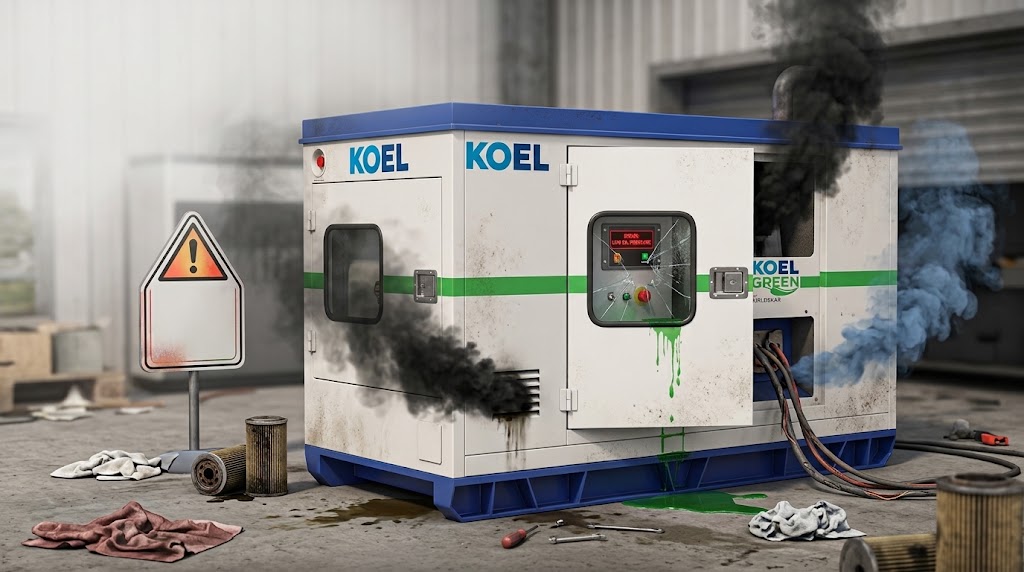
Generators serve as backup power for homes, offices, hospitals, hotels, factories, and businesses in Nepal. As with any mechanical and electrical equipment, a generator can have issues when it is overloaded, poorly maintained, improperly installed, or operated in an inappropriate environment.
A generator can fail to start, shut down prematurely, overheat, use excessive fuel, emit smoke, or have unstable voltage. Knowing about these common generator problems can help you take the right steps to know the warning signs of a problem, which can easily turn into a costly repair.
BRT International has been an authorized Kirloskar generator dealer in Nepal since 2007. This manual covers common generator problems, their causes, basic diagnosis, and when professional help is needed.
Why Do Generators in Nepal Need Regular Maintenance?
Generators in Nepal may operate for long hours during power interruptions and in locations with dust, humidity, and changing weather conditions.
Several factors can affect their performance and contribute to power backup problems in Nepal.
- Frequent starting and stopping: Repeated use can put additional pressure on batteries, starters, and engine components.
- Fuel contamination: Water, dirt, or poor-quality diesel can affect fuel filters, injectors, and engine performance.
- Dust and humidity: Dust can block filters and radiator fins, while humidity can contribute to corrosion.
- Missed servicing: Delayed oil, filter, and cooling-system maintenance can increase wear.
- Incorrect generator sizing: A generator that is too small may become overloaded, while an oversized generator operating at a very low load may run inefficiently.
Regular inspections and scheduled servicing help reduce unexpected downtime and extend equipment life.
10 Common Generator Problems in Nepal and How to Fix Them
1. The Generator Will Not Start
A generator which fails to start could be due to a battery problem, fuel supply problem or electrical problem. This is one of the most reported common generator problems, often described simply as a generator won’t start issue.
Some possible problems could be:
- Discharged battery
- Faulty battery terminals
- Low fuel level
- Air in the fuel system
- Faulty fuel filter
- Faulty starter motor
- Faulty fuse or electrical problem
What to do:
Check for the status of the fuel level, battery connections, and wiring. Ensure that the connections are tight and clean the terminals in case of corrosion. In case the engine is cranking but it fails to start, it may be the fuel system that needs attention. However, one should not try starting the engine or fixing the fuel system when one lacks the knowledge.
2. The Generator Starts and Then Shuts Down
A generator that operates only for a few seconds or minutes might be acting in response to its own protection mechanism.
Causes could include:
- Insufficient engine oil
- Lack of oil pressure
- Low coolant level
- Excessive engine temperature
- Defective sensor
- Clogged fuel filter
- Malfunctioning control panel or electrical problem
What to do:
Check the oil and coolant level according to the manufacturer’s recommendations. Make sure that there are no visible leaks and that there is no fault code on the control panel. Do not disable oil pressure, temperature, and other security systems. If the generator is still stopping, a technician should check the sensors, fuel system, and control panel.
3. The Generator Is Overheating
Engine parts can be damaged by overheating if the generator is operating under hazardous conditions. Generator overheating is one of the more serious common generator problems because of the potential for lasting engine damage.
Some of the causes may include:
- Insufficient coolant
- Dirt or obstruction in the radiator
- Poor ventilation
- Bad thermostat
- Damaged water pump
- High loads
- Blocked airflow to the generator
What to do:
Let the generator cool before checking the cooling system. Check the coolant level and the area around the radiator, but don’t open a hot radiator cap. Make sure the radiator fins remain clean and the generator room well-ventilated. In case of recurring overheating, have your thermostat, water pump, cooling system, and load conditions checked professionally.
4. The Generator Is Consuming More Fuel
A sudden increase in fuel consumption might be due to maintenance problems, wrong loading, or even the engine itself.
The possible reasons are as follows:
- Dirty air filter
- Faulty or dirty fuel injectors
- Fuel leaking
- Overloading
- Wrong generator size
- Worn engine parts
- Bad combustion
What to do:
Inspect the engine for any fuel leaks and examine the air filter as per the schedule. Professional servicing of the injectors and fuel system may be required. Moreover, see whether the generator is working within its load range. Fuel consumption needs to be considered along with the actual load, operating time, and generator specifications.
5. Voltage Keeps Fluctuating
Fluctuating voltage may impact electronic devices such as computer systems, routers, refrigerators, medical appliances, and other machinery.
Causes of fluctuating voltage may include:
- Faulty Automatic Voltage Regulator (AVR)
- Loose electrical connections
- Overloading
- Fluctuating engine speed
- Faulty governor
- Alternator issues
What to do:
Ensure that the load being served by the generator is within the rated capacity of the generator. Do not attempt to open electrical panels or test live parts unless you are qualified for such operations. In case the voltage variations persist, have an authorized technician check the AVR, governor, alternator, and wiring.
6. Black, White, or Blue Smoke From the Exhaust
The colour of exhaust smoke can help identify whether there is a problem with the engine or fuel system.
- Black smoke: It can be caused by poor combustion, insufficient air, heavy load on the engine, or malfunctioning injectors.
- White smoke: It may be generated because of incorrect fuel burning, especially at cold start. Constant white smoke can be a symptom of a more complicated engine or coolant problem.
What to do:
Look into simple possibilities like the state of the air filter, engine load, and oil. Smoke that does not go away, noise from the engine, or decreased performance should lead you to consult an expert on the problem. Do not run the generator if there is heavy smoke or noise.
7. Unusual Noise or Vibration
A healthy generator generally operates with a consistent sound and vibration level. A sudden change should not be ignored.
Possible causes include:
- Loosened mounting bolts
- Insecure foundation
- Worn bearings
- Faulty or misaligned belts
- Malfunctioning fuel injection timing
- Alternator unbalance
- Engine wear
What to do:
Inspect the generator from a safe position for loose external parts, damaged belts, or an unstable base. If the generator produces knocking, grinding, or severe vibration, switch it off when safe and arrange an inspection. Operating a generator with a serious mechanical fault can increase the damage.
8. The Battery Keeps Going Flat
A battery that repeatedly loses charge may not be the main problem. The charging system or an electrical drain may be responsible.
Possible causes include:
- Battery failure due to age or damage
- Faulty battery charger
- Faulty alternator charging
- Loose or corroded terminals
- Electric drain
- Long periods of inactivity
- Extremes of operation
What to do:
Check your terminals and connections, and have your charging system checked out. The lifespan of a battery depends on its quality, use, environment, and maintenance. If you replace the battery without testing the charging system, it will be of no use.
9. The Generator Runs at Idle but Fails Under Load
Some generators appear to work normally until appliances, machines, or other equipment are connected.
Possible causes include:
- Insufficient capacity of generator
- Problems in fuel supply
- Non-reactive governor
- Problems with AVR/alternator
- Overload on generator
- Poor electrical connection
What to do:
Check the total connected load and compare it with the generator’s rated capacity. A proper load test will indicate whether the issue is due to fuel supply, engine speed, voltage regulation, or generator size. Never connect any load more than the rated capacity of the generator.
10. Auto-Start, ATS, or Control-Panel Problems
A modern generator may make use of automatic transfer switches (ATS), sensors, controllers and monitoring equipment. A malfunction in any of these parts can influence the automatic functioning.
The following may be among the reasons for such problems:
- Malfunctioning sensor
- Problem with ATS wiring
- Problem with control panel
- Malfunctioning controller
- Low battery in the backup system
- Communication or monitoring problem
What to do:
Check the displayed alarm or fault code and review the manufacturer’s instructions. Do not bypass safety controls or modify ATS wiring without professional support. A technician can inspect the sensors, wiring, controller, and transfer-switch operation.
Generator Maintenance Checklist
Preventive maintenance can reduce the risk of common generator problems. The exact service interval should always follow the generator manufacturer’s manual, operating conditions, and usage hours. Following these generator maintenance tips consistently is one of the simplest ways to avoid common generator problems altogether.
Regular Checks
- Look for oil, coolant, or fuel leaks.
- Check battery terminals and visible wiring.
- Inspect the fuel level and general fuel condition.
- Check for unusual noise, vibration, smoke, or warning lights.
- Keep the generator and surrounding area clean and ventilated.
Scheduled Servicing
Depending on the model and manufacturer instructions, scheduled generator servicing in Nepal may include:
- Engine oil and oil-filter replacement
- Fuel-filter replacement
- Air-filter cleaning or replacement
- Cooling-system inspection
- Battery and charging-system testing
- Belt and hose inspection
- Alternator, AVR, and control-panel checks
- Load testing and performance assessment
Do not use a fixed service interval for every generator. Time, load, environment, fuel quality, and manufacturer guidelines must be taken into account.
Should You Repair or Replace Your Generator?
The decision to repair or replace a generator depends on several factors:
- Age and general condition
- Number of breakdowns
- Spare parts availability and cost
- Fuel consumption
- Cost of repair versus cost of replacement
- Existing and future power needs
- Safety and reliability
For example, a simple problem such as a torn belt, filter, battery, or sensor might require repairs. Nonetheless, frequent engine problems, engine wear, and high repair expenses can be a sign of considering a new engine.
If you have introduced new machinery or increased operations, your generator may be oversized for the new load. You need to conduct an assessment on the load to know whether it needs to be repaired, resized, or replaced.
When Should You Call a Generator Technician?
Professional assistance for generator repair in Nepal is recommended when:
- Generator keeps stopping.
- Voltage changes, or electrical devices are involved.
- Engine overheating.
- There is heavy or constant smoke.
- Knocking or any strange sounds are detected.
- Generator stops working under load.
- Leaking fuel, oil or coolant is detected.
- Testing of electrical panels, ATS systems or safety switches is necessary.
Do not bypass safety sensors, work on live electrical components, or open a hot cooling system without the required training and safety procedures.
How BRT International Can Help?
BRT International has been providing generators of Kirloskar generators in Nepal since 2007. BRT International provides generators suitable for different purposes, such as residential, commercial and industrial purposes.
BRT International provides the following services, backed by reliable Kirloskar generator service across Nepal:
- Supply and installation of generators
- Troubleshooting and maintenance of generators
- Kirloskar Green genuine spare parts
- Preventive maintenance
- Generator sizing and load assessment
- Generator repair and servicing
If your generator is not operating properly or is due for scheduled maintenance, contact BRT International for an assessment and guidance based on your equipment’s condition and requirements.
Final Thoughts
Common generator problems often show warning signs before they become major failures. Slow starting, unusual smoke, unstable voltage, overheating, leaks, and abnormal sounds should not be ignored.
Regular maintenance, correct generator sizing, suitable operating conditions, and timely professional inspections can help improve reliability and reduce downtime. If you need generator maintenance in Nepal, troubleshooting, installation, or guidance on replacement, contact BRT International for support.
Frequently Asked Questions
1. What are five common faults that can occur in generators?
Some common generator problems include starting faults, overheating, fuel system problems, fluctuation of voltages, and battery failure. Such faults may hamper the functioning of the generator. Inspections at regular intervals can detect such faults, and maintenance can avoid future major repairs.
2. What is the most common reason a generator won’t start?
A weak battery is one of the most common causes of a non-working generator. The lack of fuel, a clogged fuel filter or air in the fuel lines could also be the cause. Electrical issues might prevent the starter or control from functioning. These are some of the basic elements that should be checked first.
3. What are the common causes of a generator losing power?
A generator can lose power because of overloading, restricted fuel supply, or engine problems. A clogged fuel filter can reduce the amount of fuel reaching the engine. Problems with the AVR or alternator can also affect electrical output. Proper load management and regular servicing can help prevent these issues.
4. What is the most common problem with generators?
Failure to start is one of the problems that may arise in such situations due to improper maintenance of the battery and/or fuel system. Overheating and insufficient engine oil in the engine may equally cause poor performance of the generator. Inadequate maintenance leads to such problems occurring more often.
5. What causes a generator to start and stop?
The generator might be starting and stopping due to a lack of oil pressure, low coolant, and lack of fuel. Clogged fuel filters and clogged fuel lines might cause a disruption in the operation of the engine. A malfunctioning sensor may result in the shutdown of the generator.
6. What can damage a generator?
Overloading of the generator might lead to undue strain on the engine and electrical parts. Engine oil insufficiency, engine overheating, fuel contamination, and lack of proper ventilation might damage the generator as well. Overlooking the warnings will result in a minor problem leading to expensive maintenance work.
7. Why does a generator run but produce no electricity?
A generator may run without producing electricity because of a tripped circuit breaker or an AVR fault. Problems with the alternator, wiring, or excitation system can also affect power output. The load connection should also be checked for possible electrical issues. A qualified technician should inspect the generator if the problem continues.
8. How can I prevent common generator problems?
Follow the manufacturer’s recommended maintenance schedule and inspect the generator regularly. Check engine oil, coolant, battery condition, fuel, and filters as recommended. Use clean fuel and avoid operating the generator above its rated load. Keeping the generator clean and properly ventilated can also reduce common problems.
Popular Posts
Recent Posts
-
Kirloskar R Series vs SL Series: Which Generator Is Right for You?
Oct 06, 2026 | admin
-
Generator Overheating: Causes, Quick Fixes and Prevention Tips (Nepal Guide)
Oct 02, 2026 | admin
-
Diesel Generator Working Principle: The Complete Guide (2026)
Sep 27, 2026 | admin
-
Common Generator Problems in Nepal: Causes, Solutions, and Maintenance Tips
Sep 23, 2026 | admin
-
Generator Installation Cost in Nepal (2026): Complete Pricing & Buying Guide
Sep 10, 2026 | admin
-
IoT Enabled Genset: How Smart Generators Can Reduce Fuel Costs in Nepal
Sep 06, 2026 | admin
-
kVA vs kW: What’s the Difference? Simple Generator Power Guide
Sep 03, 2026 | admin
-
Best Generator for Hotel in Nepal (2026): Sizing, Silent Operation & Buying Guide
Aug 27, 2026 | admin