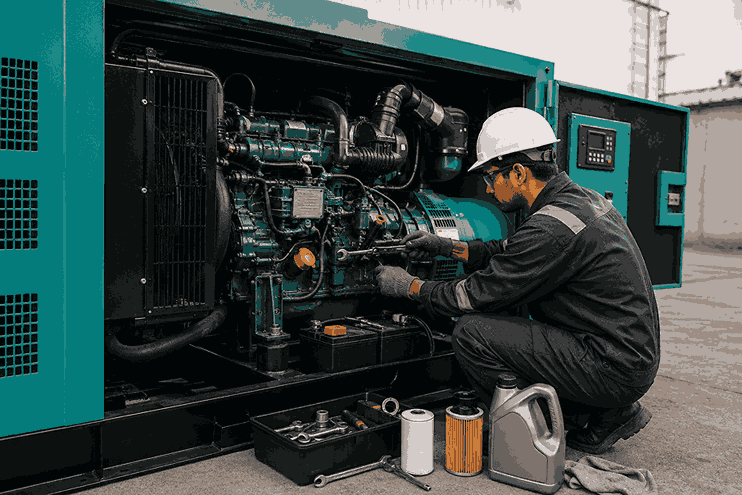
Power cuts may affect businesses, industries, hospitals, hotels, and construction sites. This may lead to losses and delays. This is why generators are very important during emergencies.
However, simply having a generator installed is not the end of your troubles. It is important to ensure that you maintain the generator. This will allow you to run the generator effectively.
Having proper generator maintenance will ensure that the generator lasts longer. This will reduce costs related to maintenance and ensure efficiency. The guide provided below will explain why it is important to maintain the generator.
What Is Generator Maintenance?
Generator maintenance includes inspection, cleaning, and servicing of the generator. It may also include replacing damaged parts of the generator. The most important thing about generator maintenance is the safety aspect. Generator maintenance also makes sure that the generator functions efficiently.
A generator comprises many interrelated systems such as:
- Engine
- Alternator
- Fuel system
- Cooling system
- Lubrication system
- Battery system
- Electrical control system
- Exhaust system
Every part of the generator needs to be inspected and maintained regularly. This will prevent any kind of fault and help in keeping the generator efficient. Idle standby generators do not get used for long periods of time.
Why Generator Maintenance Is Important?
Organisations often realize maintenance importance after generator failure during outages. The procedure helps ensure that the equipment functions properly.
Key Benefits:
- Increased Reliability: Ensures easy starting and smooth operation during power outages.
- Longer Lifespan: Reduces wear and tear on the generator.
- Fuel Efficiency: Clean filters help reduce fuel consumption.
- Fewer Breakdowns: Minimizes downtime and keeps the system running smoothly.
- Lower Repair Costs: Early detection prevents expensive repairs.
Common Causes of Generator Failure
Knowing what causes generator faults helps plan maintenance better. It is also necessary in preventing any unexpected breakdown of the generator.
- Generator Won’t Start: This could be due to a bad battery, corrosion, or problems with charging.
- Diesel Fuel Contamination: This includes water, dirt, or microbes. These can clog filters.
- Low Coolant Levels: This leads to overheating and damages the engine.
- Poor Lubrication: This is due to a lack of lubricants such as oil.
- Electrical Malfunctions: Due to loose electrical wires or faulty sensors.
- Insufficient Testing of Generators: Testing should not be overlooked.
Types of Generator Maintenance
Preventive Maintenance
Preventive maintenance is regular servicing carried out according to an established schedule. It assists in preventing breakdowns before they occur. It keeps the generator in good condition through inspection and part replacement. Preventive maintenance includes oil, filter, battery, fuel, and coolant checks.
Predictive Maintenance
Predictive maintenance relies on monitoring and testing for early problem detection. It checks the generator’s condition instead of a fixed schedule. It uses oil analysis, vibration checks, thermography, and load testing.
Corrective Maintenance
Corrective maintenance is done after a problem occurs. It includes repairing or replacing faulty parts. The goal is to restore normal performance. Corrective maintenance can be inevitable at times. However, corrective maintenance alone is not very safe because it raises costs. It also increases the likelihood of downtimes and disruptions in operations.
Generator Maintenance Schedule
Proper generator maintenance is critical to ensure proper functioning of the generator. This not only helps avoid any kind of malfunction but also extends the life of the machine. Moreover, timely inspections help detect any problem that might arise.
Daily Maintenance Checks
Daily checks are necessary for regularly used generators. The checks include fuel, oil, and coolant levels. They also include battery condition, warning lights, and leaks. Daily checks guarantee that the generator is in proper working order.
Weekly Maintenance
Weekly maintenance entails comprehensive visual inspections. This entails cleaning the generator’s surface. Belt and hose inspection are also done to determine any wear. Battery chargers and electric connections are inspected. Inspection of the exhaust system is also included. This is geared towards early identification of any damage.
Monthly Maintenance
The monthly service ensures that the generator operates effectively in actual operating conditions. This involves testing the generator under load. Fuel quality and transfer switches are checked during this process. The safety mechanisms and air filters are also tested at this stage.
Quarterly Maintenance
Deep inspection is carried out every three months. This may include replacing filters if needed. It also includes checking engine performance. Voltage output is also inspected. The battery voltage will be checked, as well as alternator components. This ensures the generator’s stability and efficiency.
Annual Maintenance
Annual maintenance is the maintenance period where the level of service is highest. The oil change is done during this period. The fuel and air filter replacement is also done during this phase. Coolant change and testing of electric parts are some of the other activities carried out in this maintenance period.
Generator Oil Maintenance
The lubricating oil serves an important function in the efficient operation of the engine. It makes sure there is no friction in the internal components of the engine. The absence of lubricating oil leads to the easy breakdown of the engine.
The lubricating oil becomes polluted with time. Impurities such as dirt and metal pieces accumulate in it.
Best Practices for Oil Maintenance
- Oil level checks should be done regularly for proper lubrication
- Only use approved engine oil from the manufacturer
- Change oil as per recommended service intervals
- Check oil for any signs of pollution or discolouration
- Check the engine for any oil leakage
These practices increase engine efficiency. They prevent wear and tear. The life of the generator can also be extended by this process.
Fuel System Maintenance
The fuel system is one of the most critical elements that should be considered in order to ensure efficient generator performance. Inadequate fuel system or its inappropriate servicing may influence engine performance.
Poor quality of the fuel may cause difficulties with starting the engine. The quality of fuel influences not only engine performance but also environmental performance.
Fuel Maintenance Checklist
- Maintain clean fuel tanks and ensure there is no dirt or sludge
- Drain off water in the fuel tank
- Ensure you replace fuel filters periodically
- Test the quality of the fuel used
- Check the fuel lines for any damage or leaks
- Use fuel stabilizers when necessary
Fuel management is key to generators that are not in use for long durations. Fuel tends to go bad, and its quality reduces with time.
Cooling System Maintenance
The generators generate much heat in their course of work. The cooling system helps in avoiding overheating. It also helps protect the engine components from any damage. The maintenance helps maintain its efficiency and reliability.
Cooling System Inspection
Checkups should include the following:
- Checking coolant levels
- Checking radiator for any obstruction or damage
- Checking hoses for leakage or breakage
- Checking fan belts for tension
- Checking coolant quality
Overheating can be caused by lack of generator maintenance. It can cause the engine to stop unexpectedly. In some cases, it might cause engine damage, which would lead to costly repairs and a shorter generator lifespan.
Battery Maintenance
The battery plays an important role in the generator because it initiates the entire process of operation. In case the battery has insufficient charge or is faulty, then the generator will fail to start up when there is a power outage.
Battery Maintenance Best Practices
- Keep an eye on the battery terminals for any loosening or wear
- Clean off the corrosion from the battery terminals and connectors
- Check the quantity of electrolyte present in the batteries if any
- Check whether the charging voltage is right
- Replace the old battery
- Battery tests should be carried out from time to time
Right battery maintenance ensures that problems in starting are prevented. This ensures proper operation of the generator.
Air Filter Maintenance
Clean air plays an important role in ensuring efficient combustion of the engine. The air filter serves to ensure that no form of dust or dirt gets into the engine. If the air filter is clogged, it will have an effect on the engine performance because it hinders air intake.
Various problems result from a clogged air filter. This is because it reduces the power of the engine. It also increases fuel consumption.
Air Filter Maintenance Tips
- Inspect air filters to determine dust accumulation and blockages.
- Clean air filters when needed.
- Change air filters that have been extensively used.
- Service air filters according to the manufacturer’s service schedule.
Cleaning air filters makes the engine operate more efficiently. This results in reduced fuel consumption.
Load Bank Testing
The Load Bank Test checks whether the generator performs well under practical conditions. The test involves placing an electrical load on the generator.
Benefits of Load Bank Testing
- Verifies the actual load-handling capacity of the generator
- Removes carbon buildup from the engine
- Improves overall engine performance and efficiency
- Helps identify hidden faults or weaknesses
- Ensures the generator is fully ready for emergency use
Many critical facilities perform annual load bank testing. It is part of preventive maintenance. It ensures maximum reliability. It also improves generator performance.
Warning Signs Your Generator Needs Servicing
Detecting early warnings is important. It helps prevent unexpected problems. It also avoids costly repairs.
Common Warning Signs
- Difficulty Starting: Battery, fuel, or electrical issues.
- Excessive Smoke: Poor combustion or engine problems.
- Increased Fuel Use: Low efficiency or maintenance needed.
- Unusual Noises: Knocking or rattling sounds may indicate internal mechanical problems.
- Fluid Leaks: Oil, coolant, or fuel leaks should be checked immediately.
- Overheating: Frequent overheating can cause serious engine damage if not fixed on time.
Generator Maintenance for Different Industries
Generator maintenance differs depending on the industry. However, generator maintenance is a requirement for all industries. It guarantees a continuous power supply.
Hospitals
Generators provide electricity to essential hospital equipment. They help in emergency rooms and operation theatres. Loss of power in hospitals can be catastrophic.
Hotels
Power generators are important for hotels. They keep guests comfortable and safe during power failures. They power lights, lifts, air conditioning, kitchens, and security systems.
Manufacturing Facilities
Any delay in power supply to a factory causes disruption and loss to the factory. However, the maintenance of the generators helps prevent such problems.
Construction Sites
Construction sites use portable and industrial generators. They power equipment on site. Maintenance helps them work well in rough conditions.
Commercial Buildings
Generators are used in office buildings and shopping complexes. They provide uninterrupted service during power cuts. Maintenance is very important for the smooth functioning of business operations.
Benefits of Professional Generator Servicing
Routine inspection can be done by operators. Professional maintenance, on the other hand, is much more comprehensive. Professionals have the know-how for the job. They make sure that the generator operates in its best possible condition.
What Professional Technicians Can Do
- Detect hidden or early-stage technical issues
- Perform advanced diagnostic testing
- Conduct load testing for performance verification
- Check and verify electrical system performance
- Replace critical or worn-out components
- Ensure compliance with safety and industry standards
Professional servicing enhances reliability. It helps minimize chances of failure. It also assists in minimizing maintenance and operation costs.
Choosing the Right Generator Maintenance Partner
The selection of a trustworthy generator servicing company is very critical. It guarantees consistent performance and durability. A good maintenance company reduces failure risks. It improves efficiency. It also increases generator lifespan.
Key Factors to Consider
- Industry experience in generator installation and servicing
- Strong technical expertise and trained technicians
- Availability of genuine spare parts
- Well-structured preventive maintenance programs
- Quick emergency support and response services
- Manufacturer certifications and approvals
Working with a trusted generator maintenance specialist ensures proper servicing. It improves reliability. It also supports long-term operational efficiency.
Conclusion
Maintenance of generators is essential for providing backup power. It makes operation more efficient and increases the lifespan of the equipment. It also minimizes the risks of generator malfunction.
Generator maintenance includes inspection, oil, fuel, battery, cooling checks, and load testing.
Investing in regular maintenance ensures long-term reliability and smooth business operations.
For reliable Kirloskar generators and their maintenance in Nepal, trust BRT International.
Frequently Asked Questions
1. What maintenance is required for a generator?
Maintenance for generators is done through regular checking. This involves changing the oil. This involves changing filters. This involves checking the battery. This involves cleaning the fuel system. This involves checking coolant levels. This involves load testing.
2. What is the most common problem of generators?
The most common cause is a malfunctioning battery that cannot start the generator. The other problems that occur frequently are fuel contamination and inadequate maintenance.
3. How to diagnose generator problems?
Generator problems can be diagnosed using warning signs. Listen out for any abnormal sounds. Check the amount of fuel and oil. Check the state of the battery.
4. How often should a generator be serviced?
Most generators need monthly checks. They also need yearly professional servicing.
5. Why does a generator fail to start?
The generator might fail to start because of battery problems. The generator may not start due to insufficient fuel. Fuel filters could also be clogged. Problems could also arise because of faulty wiring. The starter motor problem could cause the same result.
6. What happens if generator maintenance is ignored?
Maintenance neglect may lead to breakdown. Increased fuel consumption would be another consequence. Overheating may also occur. The cost of repair would also be increased. Extreme situations might cause failure of the whole system during emergencies.
7. What is included in preventive generator maintenance?
Preventive maintenance involves changing of engine oils. Preventive maintenance involves changing filters. Preventive maintenance involves inspection of batteries. Preventive maintenance involves checking of coolants. Preventive maintenance involves cleaning of fuel systems. It also involves system testing.
8. How long does a generator last with proper maintenance?
With proper maintenance, a generator can last 10–20 years. This depends on usage, load, and servicing quality.
Popular Posts
Recent Posts
-
Kirloskar R Series vs SL Series: Which Generator Is Right for You?
Oct 06, 2026 | admin
-
Generator Overheating: Causes, Quick Fixes and Prevention Tips (Nepal Guide)
Oct 02, 2026 | admin
-
Diesel Generator Working Principle: The Complete Guide (2026)
Sep 27, 2026 | admin
-
Common Generator Problems in Nepal: Causes, Solutions, and Maintenance Tips
Sep 23, 2026 | admin
-
Generator Installation Cost in Nepal (2026): Complete Pricing & Buying Guide
Sep 10, 2026 | admin
-
IoT Enabled Genset: How Smart Generators Can Reduce Fuel Costs in Nepal
Sep 06, 2026 | admin
-
kVA vs kW: What’s the Difference? Simple Generator Power Guide
Sep 03, 2026 | admin
-
Best Generator for Hotel in Nepal (2026): Sizing, Silent Operation & Buying Guide
Aug 27, 2026 | admin