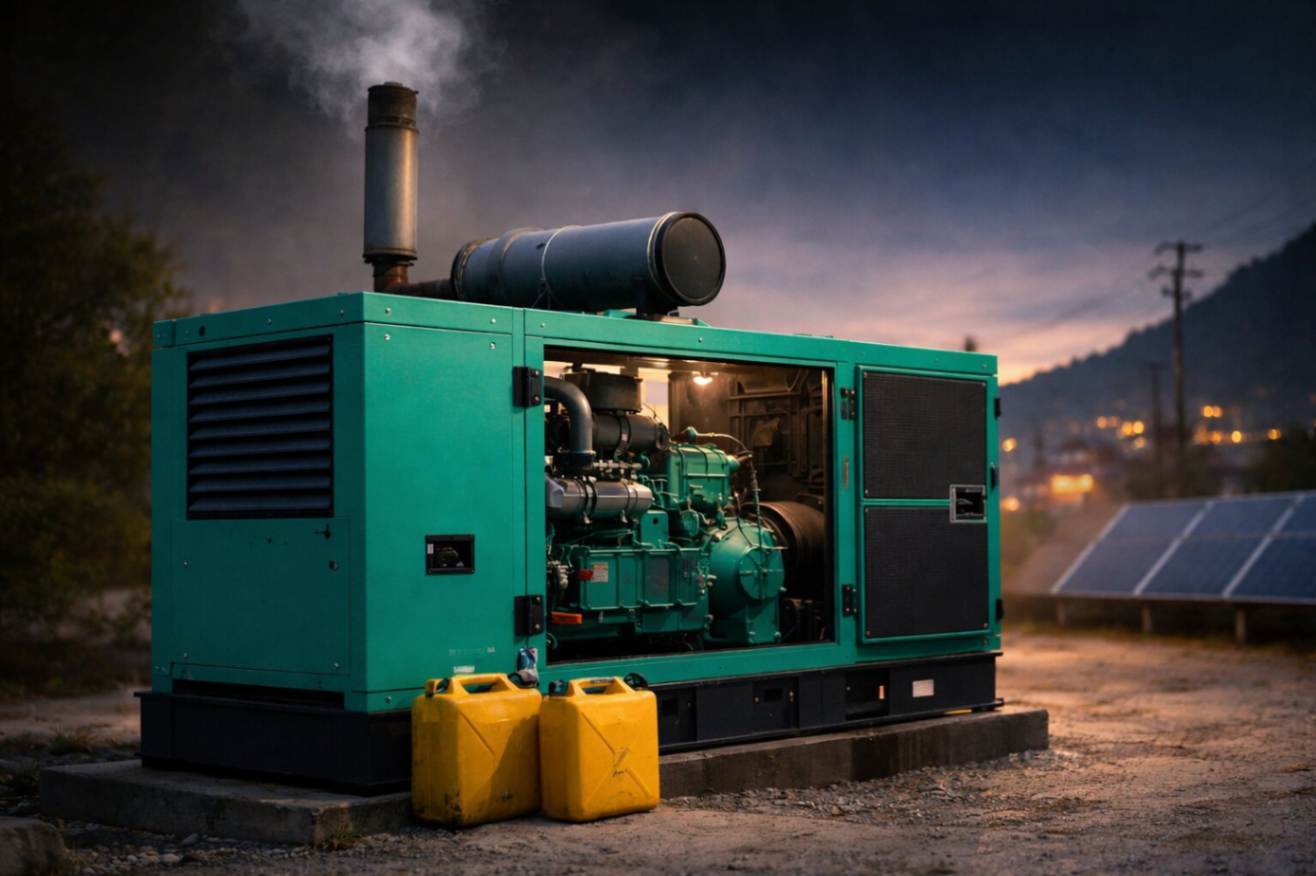
In Nepal, a hospital might have a problem with a cut in power supply because of the unavailability and unreliability of the electricity supply. This problem is more common in rural areas. Electricity is not a luxury; it is a necessity.
Electricity is a must for a modern hospital. This is because a hospital requires electricity for its life-supporting equipment. These include ICU, ventilators, diagnostic, and theatre equipment. A power cut, however short, is life-threatening for a hospital.
For this reason, generators for healthcare are a must-have in hospitals in Nepal. In this blog, the need for hospitals to use generators, the type of generators to be used, and how to install and maintain them in Nepal will be discussed.
Why Hospitals Cannot Risk Power Outages?
Hospitals are always under high pressure, and even if the power supply is interrupted for a while, problems can arise. Hospitals require an uninterrupted power supply. This is considered vital for the proper functioning of the hospital. The main reasons why hospitals require an uninterrupted power supply are:
- Patient Safety: The equipment has to be kept on at all times.
- Emergency Support: Surgeries cannot come to a halt because of the power cut.
- Lab & Diagnostics: Blood storage, tests, etc., all require constant power.
- Communication Systems: Nurse calls, telemedicine, etc., should be operational.
Key Point: Generators should be used to ensure the smooth operation of the hospital.
Types of Generators for Healthcare Facilities
Hospitals require instant start-up power that provides stable electricity for critical equipment. A generator suitable for use in a hospital varies with the size of the hospital.
Here are the main types of generators normally suitable for use in hospitals:
1. Diesel Generators — Reliable Power for Critical Loads
Diesel generators form the most common source of backup power in large hospitals. They offer the advantages of:
- High reliability and lifespan, even after prolonged usage
- High ability to handle large electrical loads, for example, ICU equipment, ventilators, etc.
- High lifespan with good fuel economy
Diesel generators for use in clinic/hospital environments provide necessary backup during power cuts and are essential generators for healthcare.
2. Air‑Cooled Generators — Ideal for Small‑to‑Medium Facilities
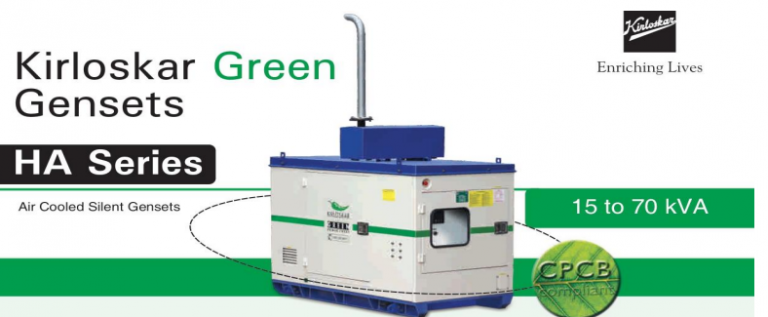
Air-cooled generators such as Kirloskar Green HA Series are compact, efficient, and reliable machines.
They offer the advantages of:
- Easy installation and maintenance
- Suitable for use in smaller healthcare facilities, clinics, and specific areas of the hospital
- Designed to function effectively even in harsh environmental conditions
Air-cooled generators are best suited for use in smaller hospitals as dependable generators for healthcare.
3. Liquid‑Cooled Generators — Continuous & Heavy‑Duty Performance
For hospitals that require high power consumption, liquid-cooled generators can be the best solution, as they can provide:
- Better dissipation for extended continuous operation\
- Quiet operation with minimal vibrations
- Longer lifespan with increased reliability for high load conditions
These liquid-cooled generators can be used for hospitals, ICUs, operating rooms, and laboratories as robust generators for healthcare.
4. Hybrid & Smart Generators — Future‑Ready Power Solutions
Some hospitals use a generator called a hybrid generator, which uses solar power and smart monitors. It is very effective in conserving fuel, is sustainable, and is easy to maintain. These are advanced generators for healthcare solutions.
Standby Operation — Fast Activation When It Matters Most
In hospitals, the generator must come on instantly during a power outage. The majority of hospital generators are designed to turn on automatically. This ensures that generators for healthcare provide uninterrupted power when it is critical.
Key Considerations for Implementing Generators in Nepalese Hospitals
1. Capacity Planning
Generator capacity is an important consideration. Hospitals with many intensive care units, theatres, and laboratories require two generators. The small generator may not have the ability to handle the loads, hence failing.
2. Regulatory Compliance
The generators must comply with national and international safety standards. The safety standards include:
- NFPA 110 – Standard for Emergency and Standby Power Systems
- NEC 700 – National Electrical Code for Healthcare Facilities
This ensures that generators for healthcare are properly activated in case of an emergency.
3. Installation Best Practices
For safety and efficiency, it is imperative to have the generators installed properly:
- The generators should be installed in an area with good ventilation to prevent overheating.
- The system should be installed in an area that is not prone to flooding and damage from the environment.
- The wiring should be properly carried out to protect delicate equipment found in hospitals.
4. Maintenance & Testing
Generators, like any other equipment, need to be tested and maintained regularly:
- The generator should be tested while under load at least once a month.
- The fuel, oil, and coolant levels need to be checked.
- The electrical connections and the control panel need to be checked.
This is done to ensure the generator is on during an emergency.
5. Fuel Supply & Management
Hospitals require 72 to 96 hours of backup power supply. The fuel supply is a key factor, particularly in remote areas.
6. Nepal-Specific Challenges
- The grid supply is unreliable, particularly in rural areas.
- The generators in some hospitals do not start, and some generators might be insufficient for use.
- The lack of technical experts might hinder the performance of the generators.
The challenges need to be addressed by planning and maintaining the generators for healthcare services.
Advantages of Reliable Generators for Healthcare
Quality generators for healthcare offer a variety of benefits to hospitals, including:
- Patient Safety: Generators for healthcare ensure that ventilators and monitors function during a power cut.
- Smooth Operations: Surgeries, ICUs, and labs can be carried out without any disruptions.
- Compliance & Reputation: Generators for healthcare assist hospitals in fulfilling safety norms, thus earning their reputation.
- Cost-Effective: They save hospitals money during a power cut, thereby being a cost-effective option.
Quality generators for healthcare are a necessity, not a luxury.
Future Directions: Hybrid and Sustainable Solutions
Hospitals in Nepal use hybrid generators for uninterrupted power. The advantages that can be achieved with the hybrid power systems are:
- Fuel Cost Reduction: By reducing the consumption of diesel, the hospital can save money on operational costs.
- Sustainability: The system is eco-friendly, hence assisting the hospital in joining the green revolution.
- Reliability: The system will ensure the hospital is operational in the event of a power outage.
- Energy Independence: By using hybrid generators, the hospital will be independent of the main power, which is unreliable.
- Low Maintenance: By reducing the number of generators, the hospital will save money on maintenance costs.
- Scalable & Smart: The systems can be expanded to meet the needs of the hospital and can even be monitored remotely.
This is important to rural hospitals in Nepal, as there may be a shortage of diesel, but there is guaranteed power from the sun.
Importance of Choosing an Authorized Generator Dealer
- Certified and Trained Technicians
The authorized dealers have trained technicians. They are aware of the engine, alternator, and electrical systems. This avoids failures and ensures safe operation.
- Manufacturer-Approved Service Methods
The servicing is done according to the manufacturer’s instructions. This is safe and efficient. It also ensures the generator remains under warranty.
- Usage of Genuine Kirloskar Spare Parts
Only genuine Kirloskar spares are used. These spares are the best fit. They are durable and increase fuel efficiency.
- Preventive Maintenance and Load Testing
Regular servicing avoids breakdowns. Load testing ensures the generator is working during outages.
- Quick Technical and Emergency Support
The authorized dealers offer quick technical and emergency support. This is critical during unforeseen power cuts in Nepal.
- Lower Long-Term Costs
Servicing reduces costs. It saves fuel and increases the life of the generators for healthcare.
Conclusion
Reliable generators are essential for the smooth operation of hospitals in Nepal. Generators work properly during critical times only with proper planning, installation, and maintenance.
BRT International Pvt. Ltd. is an authorised dealer of Kirloskar Generators. It provides the best diesel, liquid-cooled, and hybrid generators for healthcare institutions. BRT International Pvt. Ltd. helps install generators and ensures they work properly during power cuts.
Secure your hospital’s power today. Contact BRT International and select the best generator for a healthcare institution.
FAQs
1. Why are generators important for hospitals in Nepal?
Hospitals require electricity to operate life-saving equipment, intensive care units, operating rooms, and laboratories. Power cuts are very common in Nepal. Generators are used to operate hospitals uninterruptedly.
2. What types of generators are used in healthcare facilities?
The types of generators used are as follows:
- Diesel Generators – The most reliable type of generator used for power supply.
- Natural Gas Generators – A cleaner alternative to diesel.
- Hybrid Generators – A combination of solar power and a power supply. A green alternative that provides an uninterrupted power supply.
3. How do hospitals decide the size of a generator?
A certain amount of power is needed by the hospital. This power is needed for intensive care units, laboratories, etc. Large hospitals need two or more generators to act as a backup power supply so that there is no power outage in the hospital.
4. How often should hospital generators be tested and maintained?
The generators should be tested once a month. The generators should be maintained by checking the fuel, oil, coolant, and electricity of the generators.
5. How long can a hospital generator run during a power outage?
The generators should run for 72-96 hours, and this depends on the fuel used by the generators. The fuel used by the generators should be enough for the remote hospitals.
Popular Posts
Recent Posts
-
Kirloskar R Series vs SL Series: Which Generator Is Right for You?
Oct 06, 2026 | admin
-
Generator Overheating: Causes, Quick Fixes and Prevention Tips (Nepal Guide)
Oct 02, 2026 | admin
-
Diesel Generator Working Principle: The Complete Guide (2026)
Sep 27, 2026 | admin
-
Common Generator Problems in Nepal: Causes, Solutions, and Maintenance Tips
Sep 23, 2026 | admin
-
Generator Installation Cost in Nepal (2026): Complete Pricing & Buying Guide
Sep 10, 2026 | admin
-
IoT Enabled Genset: How Smart Generators Can Reduce Fuel Costs in Nepal
Sep 06, 2026 | admin
-
kVA vs kW: What’s the Difference? Simple Generator Power Guide
Sep 03, 2026 | admin
-
Best Generator for Hotel in Nepal (2026): Sizing, Silent Operation & Buying Guide
Aug 27, 2026 | admin